Domain Names #1

One of my continuing business interests is the Internet and domain names.

In March, 1996, as the World Wide Web began to become commercialized, I registered Redcap.com for my family-owned corporation, Redwood Capital.  With the help of a good friend,  Andy Thornley, the Redcap.com website was launched soon thereafter.

At that time in 1996, there were fewer than ½ million domain names registered world-wide.  Many companies much larger than Redwood Capital were without websites.  Today there are more 252 million domains registered, more than 500X those in 1996, and almost every US company has a unique domain and website, as do many individuals, families, non-profits, government agencies, colleges & universities, etc.

Every domain name ends with a top-level domain label.  Top-level domains (TLDs), unsurprisingly, are the highest level of domain names on the Internet and are classified by type.

Types of TLDs are:

  1. Generic TLDs (gTLDs) such as .com, .net, .org, and others. Today there are 19 gTLDs (n=19), but there will soon be many, many more.
  2. Country Code TLDs (ccTLDs), of which there are now approximately n=250.
  3. Internationalized ccTLDs (commonly called “IDNs” – for non-Latin alphabets such as those used in China, Japan, Saudi Arabia, etc.).  IDN n=41.
  4. US only TLDs (.mil, .edu, .gov).

Totaling the TLDs, we see there are approximately 313 in use today.

The counts of domains registered within each TLD are uneven and may be consistent with the Pareto Principle.   Of the approximately 250 million domain names registered, approximately 107 million are in the .com TLD.  Approximately 15 million are in .net while 7 million are .orgs.  There are approximately 120 million domains in ccTLDs, with 60% of those in just 9 of the extensions.  Thus a large majority of registered domains are in just a few TLDs.

Created in September, 1998, The Internet Corporation for Assigned Names and Numbers (ICANN), a nonprofit private organization headquartered in Los Angeles, oversees a number of Internet-related tasks and the Internet Assigned Numbers Authority (IANA).  Through IANA ICANN is responsible for the Internet’s stable and secure operation including coordination of the global Internet’s systems of unique identifiers including domain names.

Beginning in September, 2008, ICANN began a formal process to discuss a significant expansion of the number of TLDs.  ICANN eventually gave the green light to such an expansion and developed detailed protocols for applications by interested parties, application assessment and approval, and TLD implementation.  The application phase is complete while a portion of the assessment and approval phases continue for some applicants.  Many applications have been approved and the first batch of new TLDs is becoming available at this moment.  With over 1900 applications, it is expected that over the next couple of years, over 1500 new TLDs will be in service.  Because of the expanding numbers of TLDs, many more domain names will be registered over the next few years.  The implications of this are many, some are unknown, and it is almost certain there will be unintended consequences.

Examples of new TLDs for which domain names will be available to the general public soon include:  .bike, .clothing, .guru, .holdings, .plumbing, .singles, and .ventures

Last week I attended a conference with a focus on the changing Internet namespace, NamesCon, and in my next post I’ll write about it.

Posted in Domain Names | 1 Comment

Giving Well

In two earlier posts I discussed charitable giving.  Now, as year-end is approaching, my mailbox is filling with solicitations from a multitude of non-profits.  (Yours is probably filling too.)  As I do intend to gift a budgeted amount this year to more than one non-profit, I thought it worthwhile to revisit two articles I’ve read and also to dig deeper into the subject of charitable giving.  I’d like my giving to be more logical and systematic, and not just a more-or-less thoughtless response to an appeal with heart-tugging photos of children or cats, etc., or for important health, environmental, or other concerns.  With that as background, I’ll strive to assemble and summarize information that may be of help to both me and you with our charitable donations.

First, as an underlying principal or personal philosophy, since the money I will give means something to me, I’ll strive to ensure the gifts will be meaningful to each recipient organization and thereby gives a boost to its on the ground work.  With that principal in place, and a gifting budget to be spread around to several organizations, I’ve concluded I should target small, thrifty organizations doing work that is aligned with my interests and/or concerns.

I say “target” because there are many, many non-profits (nearly 2 million in the U.S. alone), and finding the more worthy ones is a more sensible (to me) approach than just responding to solicitations.

I say “small” organizations because my gift won’t move the needle at any large, multimillion dollar budget organization (such as many, if not most, hospitals, universities, art museums, etc.).  The idea of giving where my money would in all likelihood disappear into a big-budget operation wouldn’t feel particularly satisfying, a consideration when planning gifts.  You also may know this from experience.

So how might one construct an approach to giving that is aligned with one’s desire to make a difference yet sized to one’s wallet?  For a good starting point, I suggest reading a recent (12/6/13) article from the New York Times, Making a Difference in This Season of Giving.

This article also serves as a pointer to excellent resources, which offer many ideas/suggestions on organizations to consider.  Excellent sources of relevant information include:

The Center for High Impact Philanthropy at the University of Pennsylvania.  “Established in the spring of 2006 by the dean of the School of Social Policy & Practice and a small group of anonymous Wharton alumni, the Center provides independent analysis, education and other decision making tools for donors concerned with maximizing the social impact of their funds. To meet our goal of providing smart, practical guidance to donors who care about impact, we synthesize the best available information from three domains: research, informed opinion and field experience. We believe the most promising opportunities exist where the recommendations of these three domains overlap.”

TheLifeYouCanSave.org by Princeton Bioethics Professor Peter Singer, “a movement of people fighting extreme poverty. We hold that an ethical life involves using some of our wealth and resources to save and improve the lives of those less fortunate than us.”

GivingWhatWeCan.org, “an international society dedicated to eliminating poverty in the developing world.”

Innovations for Poverty Action is “a nonprofit dedicated to discovering what works to help the world’s poor. We design and evaluate programs in real contexts with real people, and provide hands-on assistance to bring successful programs to scale.”

If you were to spend a portion of an hour on some or all of the above sites, I’m sure you’ll become more and better informed about the worthy giving opportunities that abound.

Finally, given it is nearly year-end, and giving is often somewhat motivated by tax considerations, the Wall Street Journal recently published (12/6/13) a bird’s eye view of some of the issues.  Hopefully, the article, “Giving and getting: tax-savvy ways to be charitable now ,” will continue to be available at WSJ.com.

Two footnotes:

1)     Guidestar.org is an outstanding source for data on U.S. based non-profits.  For example, federal tax returns on over 1.8 million non-profits can be accessed at Guidestar free of cost!  Also, for the really curious, their large database can be searched on variables including keyword, city, state, subject, and the org’s size.

2)     Lest the reader sense I am advocating a severely narrow view of possible giving opportunities, that is not the case.  I’m trying to say, first, that one should be proactive in the matter.  Second, in the interest of time I’ve relied upon a recent newspaper article as a springboard to discuss giving.  The NYTimes.com article mentioned worthy organizations with an interest in poverty, so that is naturally what I’ve written about here.  In the future I expect to write about opportunities in at least one other domain, water/saltwater.

Season’s Greetings!

Posted in Best Practices, Non-profits | Tagged | Leave a comment

Leyte Island, Philippines

As Thanksgiving was yesterday, we all had a chance to reflect on what we’re thankful for.  While one can certainly be thankful for the positives, negatives can be good “to have” too:  for example, not living in Syria or in the path of a tornado, not “owning” a botched website rollout, etc.

If you lived in the Philippines (especially) and were out of the path of Typhoon Haiyan, you’d be thankful of that.  The Typhoon roared through the Philippines on November 8th and placed life-changing hardships on millions of people.  The storm and its aftermath have been on the front page of the New York Times more than any other story in a long time:  over half of the past 21 days have had Typhoon related photos on the front page; 7 days have had front page articles and 3 additional days had front page redirects to major articles inside.  It is a rare event that garners so much front page real estate.

At landfall in the Philippines, the Typhoon had sustained winds estimated at 195 MPH, a record for any storm ever, easily qualifying as a Super Typhoon (150 MPH sustained for a minute).   The wind and tides caused a surge of 4-5 meters over much of the eastern coast of Leyte Island– since much of the island’s coast is low, and torrential rains accompanied the winds, flooding was severe.

As of November 27th the Typhoon’s death total was 5500; over 1000 people are still missing.  Property damages are estimated at $12-$15 billion, an enormous amount for a lesser developed country such as the Philippines (5% of GDP).   The losses of humans, not counting deaths, but just counting the dislocations, anguish, medical, and other natural disaster related tolls on the living is impossible to calculate, but it is surely much greater than the property damage costs.

Much of the Typhoon’s impact was in its direct path on the island of Leyte, in particular Tacloban City, the island’s major city and capital.  (Tacloban, which is/was a city of 220,000 on the Gulf of Leyte, site of the definitive Naval battle of WWII, was pretty much wiped out.)

All this havoc took place in a country with a per capita GDP in 2012 of only about 1/20th that of the U.S., according to the IMF (International Monetary Fund – $2611/person vs. $51,704).

The Philippine government estimated that foreign aid received as of November 27th totaled $12.1 million in cash.  As of that date an additional $500 million or so in aid had been pledged, largely in kind items.  That doesn’t seem like much.  Great Britain has provided the most aid of any country, and many countries lead the U.S. in aid per capita.

The news and stories on Typhoon Haiyan were especially poignant when contrasted with the results a contemporaneous art auction at Christie’s in New York City.  The November 12th auction, for buyers who were willing to pay big dollars for something of basically zero utility in a natural disaster, was breathtaking in light of the suffering in the Philippines.

(It was reported that a not well-known painting was auctioned off for a world record amount, $142.2 million (a figure that doesn’t include sales taxes or the buyer’s premium of over 12%).  For an interesting article aligned with my views on that world, see Art Is Hard to See Through the Clutter of Dollar Signs).

On a brighter note, there is a wonderful 14 minute non fiction film that very effectively conveys interesting and unique aspects of life on Leyte before the Typhoon. The Selling Songs of Leyte was completed about 10 years ago as a labor of love by a native of the Philippines.  With footage exclusively from Leyte Island, the film offers an original and well edited record of life on Leyte before the Typhoon.

The Selling Songs of Leyte was largely a personal project of Eli Africa, a resident of California’s Bay Area, who conceived it,  made several trips to the Philippines to film, did the editing, promoting, etc.

At its second annual festival in 2005, the San Francisco Ocean Film Festival screened The Selling Songs of Leyte.  For me, having participated in 10 years’ of annual SF Ocean Film Festivals and viewed hundreds of ocean-related films, Selling Songs of Leyte remains high on my list of most memorable.

For the full 14 minute film on YouTube, click below:

As of the film’s release date in 2003, the life style and custom reported on was said to be dying.  The Typhoon didn’t help because its bull’s-eye was the location of all the Selling Songs footage.

The singing fishmongers and fishwives profiled were a truly unique cultural feature of Leyte and our civilization.

Notwithstanding the Typhoon, one can only hope those hard working, colorful men and women of Leyte will be able to reestablish their presence and continue their unusual, authentic, melodic tradition.


P.S.  I’m really thankful Eli Africa had the interest, commitment, and skills to memorialize the selling songs and singers so well.

Posted in Non-profits | Leave a comment

Ed Keeble, another Veteran, one of 58,000+

Graduating from Princeton in 1966, my class left the comfort of a college campus just when the Vietnam War was really heating up.  With the Draft looming, classmates had various military options and other choices such as graduate school, a Draft deferrable job, or pursuing a conscientious objector (CO) designation.  I chose to apply for and then attended Naval Officer Candidate School, was commissioned, and made it through the War – albeit with many days on the Navy’s front lines in the South China Sea, where my ship dodged most of the enemy’s shells aimed at it.

Unfortunately, one of my close friends at Princeton, Ed Keeble, didn’t make it through the war.

Edwin A. Keeble, Jr., 1962

Ed was a natural leader, a wonderful man, and was chosen as President of my eating club, Cannon Club.  Below is his obituary as written by my Class:

Edwin Augustus Keeble, Jr., Princeton ‘66

Ed Keeble was killed in action in Vietnam Feb. 28, 1969. A Marine helicopter pilot, he died when his craft was hit by enemy ground fire in the A Shau Valley just south of the DMZ.

Ed came to Princeton from Deerfield Academy. An English major, he found time for lacrosse and the “good men” he valued so highly. He lived in Patton Palace and was a member of Cannon Club, where he was elected president his senior year.

A member of the Semper Fidelis Society while at Princeton, Ed wanted to be a good Marine pilot when he graduated. After completing basic training at Quantico, he went to flight school at Pensacola. He married Alice Orr (Happy) Collins on March 4, 1967, while still in flight school. He did well in flight school and, given his choice, decided on helicopters.  Temporarily assigned to New River, North Carolina, Ed was ordered to Vietnam in August, 1968.

Ed was buried at Arlington National Cemetery with full military honors March 20, 1969. To Ed’s wife and family the Class extends its deepest sympathy.

A memorial scholarship has been established in Ed’s name at Deerfield. Any classmate who wishes to contribute may send a donation to the Edwin Augustus Keeble, Jr. Scholarship, Deerfield Academy, Deerfield, Mass.

(The above is from the Princeton Alumni Weekly of July 1, 1969.)

Ed was one of 24 Princeton University Vietnam Era War Dead.  Of those 24, five are from the Class of 1966, easily more than any other class.

I remember “Keeble Ed” well and can assure readers the world was seriously shortchanged by his early death.

The photo below is a portion of the Vietnam Veterans Memorial.  As of 2013, there are 58,286 individuals denoted as War Dead on the Memorial.

Ed Keeble VN Mem

Names are added to the Memorial when it has been determined that a service member has died directly from combat-related wounds.  Cancer victims of Agent Orange, and post traumatic stress suicides do not fit the criteria for inclusion upon the Memorial.

For more on the Memorial, visit the website of the Vietnam Veterans Memorial Fund,  the nonprofit organization authorized by the U.S. Congress in 1980 to build a national memorial dedicated to all who served with the U.S. armed forces in the Vietnam War.

Posted in People of note | 1 Comment

On Veterans Day, one Vet in 16 million

As today is Veterans Day, I thought it may be of interest to touch on one of the Veterans in my family.

My father, Krist K. Jake, saw action in World War II as an Army enlisted man, one of 16 million Americans who served. During his lifetime he didn’t care to talk much about his wartime years so his 4 children had scant understanding of his travels and experiences during the War. However, several years ago, upon the death of our mother, we kids discovered a cache of 685 handwritten letters between them, all exchanged while they were separated by the War during 1942-1945.  These were recently reviewed and cataloged by my brother – they provide a personal, intimate, touching portrait of a relationship stressed by the distances and unknowns of wartime.

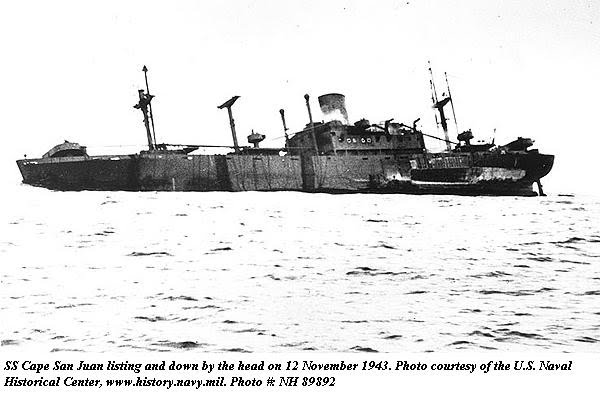
Krist K. served from October, 1942 to November, 1945, mostly overseas in New Guinea or the Philippines. On November 11, 1943, Private Jake was one of 1348 Army troops on the freighter SS Cape San Juan en route in the Pacific from San Francisco to Australia.  On that day, 70 Veterans Days’ ago today (!), the ship was torpedoed by a Japanese sub and all hands were ordered to abandon ship as it listed and took on water.  It sank a couple of days later.  He was forced to go swimming for hours in the messy, chaotic, scary Pacific.*

Cape San Juan

After the torpedoing, survivors were picked up over 30 hours by several friendly ships and a flying boat, then delivered to New Caledonia or Fiji, 300 miles to the northwest.

For all of 1944 Dad was in the South Pacific on the War’s front lines. I was 20 months old when he was finally reunited with my mother in November, 1945; that’s when we met in person for the first time.

Without doubt, there are millions of somewhat similar stories of those who fought in WWII. One can only imagine the War’s enormous costs of all types: financial, human, & emotional. Not pretty.  I understand why my Dad didn’t volunteer much about his time in the War, but wish I’d have been aware enough to be more curious when I had the chance.

In Washington, the World War II Memorial honors the service of sixteen million members of the Armed Forces of the United States of America, the support of countless millions on the home front, and the ultimate sacrifice of 405,399 Americans. It’s certainly worth a visit.

*from the excellent website, http://ssarkansan.com: “that over a thousand men entered the oily, shark infested, fifteen foot rain swept seas that November morning in the South Pacific and all but 117 made it out is nothing short of a miracle.”

Posted in People of note | Leave a comment

Lou “the glue” Marcelli

Lou Marcelli was an original who led a unique and remarkable life – if lives are art projects, his was a masterpiece. He passed away earlier this month at age 85. Last Sunday afternoon members of The Dolphin Swimming and Boating Club, his home for many years, held a tribute to Lou during which his ashes were scattered in front of the Club in San Francisco Bay’s Aquatic Park.

The tribute was attended by an estimated 400 of his family, friends, club mates, and other admirers who spanned all ages and walks of life. It featured seafood of course – oysters, prawns, and salmon, jambalaya, and his world famous pasta with calamari, all handmade or cooked by his club mates.

How did Lou come to have such a large portfolio of relationships? First, the obvious – he was a pretty constant presence as caretaker for 40 years at the 1100+ member Dolphin Club. But beyond that, what was made Lou special? I asked several club members and, after they each thought some, the distilled comments were that he was straightforward and his spoken word was unembellished and irrefutable.  Plus Lou was non-judgmental and the opposite of petty.  He was certainly a man of the sea, but, at least since I met him in 1991, only moderately salty.

He swam in San Francisco Bay 4 days/week year around into his 80’s.

Lou was a lifelong bachelor but had a lady-friend for his last 4 decades. He liked children and they befriended him. He had a varied working life spanning several industries. He was a very popular and generous cook, willing to pass on his expertise advice if asked. Of course, in his younger years especially, he liked a good time.

His nickname was “Lou the Glue.” Some said it was because he was often glued to a barstool.  He said it was because he liked to stay in the same place. He was caretaker at the Dolphin Club from 1973-2013.

We at the Dolphin Club miss Lou but are thankful for knowing him.

Draft Resume of
Louis Joseph Marcelli
5/16/28 – 10/16/2013

Born in Collinsville, California to a father from Italy and an American mother of Italian heritage.

1943 – Started swimming in San Francisco’s Aquatic Park

1943-1973 – Worked as mail carrier, fisherman of herring in the SF Bay and salmon in Alaska, bartender.

1965-1968 – Proprietor and bartender at Dino and Carlo’s Bar, which hosted many premier or soon to be premier performers.  Friend of many including author Richard Brautigan. Quite a party animal. The recent biography of Brautigan, Jubilee Hitchhiker, gives a flavor of those days.  Promoter of rock bands including the Cleveland Wrecking Company.

1965 – Joined the Dolphin Club.  Took on the role of unpaid caretaker of the club in 1973. Club opens at 5AM and closes at 11PM and that was one of his departments.

???? – Began acting career including becoming a member of the Screen Actors Guild. Seen in ads for ______.

1995 – Quoted in the obituary of the legendary Walt Stack.
“He was tough old goat,” said longtime club caretaker Lou Marcelli. “Rain, wind, fog, cold — nothing stopped him. He never took a break. Never.”

1996 – Quoted in San Francisco Chronicle on Rose Pistola, who licensed her name to the fine restaurant in North Beach.
“North Beach veteran Lou Marcelli, caretaker of the Dolphin Swim and Boat Club, recalled Pistola’s former hold on the neighborhood. The old bar site is currently home to the Washington Square Bar & Grill.

“In the late ’50s and early ’60s, when rock ‘n’ roll first came on, hers was the hottest spot in North Beach,” Marcelli said. “It was a bar, but if Rose said, ‘Go into the kitchen,’ you were set. There were old fishermen, old longshoremen, a whole menagerie.””

2000 – Quoted in the San Francisco Examiner a day after the New Year’s Day Alcatraz swim.

““Sharks?
Marcelli scoffed at the idea.
“It’s a myth. We’ve been here since 1877 and no Dolphin Club swimmer has been hit by a shark. Once in a while a sick sea lion will come up and bump you in the butt, that’s all.””

2004 – Quoted in San Francisco Chronicle on George Kebbe, who In the winter swim season that just ended, Kebbe logged 356 miles — making him the Dolphin Club’s all-time Polar Bear champion.
“He’s crazy and he needs a life,” joked Lou Marcelli, the club’s commodore, who at 75 still swims four days a week, when he’s not tending to the club’s more than 900 members and four ducks, which eat grain out of a souffle dish on the dock. “But it’s one of the greatest feats of all time.”

2004 – Lou on National Public Radio as an “Old Stove” of San Francisco.  The article contains sound clips and his calamari & pasta recipe is below.*

2010 – “Sunrise to Sunset on the Wharf” profile in the Sunday New York Times.

Life-long cook. 3 recipes noted by Mario Batali at the Food Network including “easy” sand dabs.

Recent article in the San Francisco Chronicle.

Fond recollections by a friend, Pia Hinkle.

Heartfelt blog post by another Dolphin Club member, Susanne Friedrich.


Lou making his delicious fried calamari at the Opening Reception of the San Francisco Ocean Film Festival, January 28, 2005

Lou making his delicious fried calamari at the Opening Reception of the San Francisco Ocean Film Festival, January 28, 2005

Lou Marcelli’s Calamari on Pasta, courtesy of Saveur magazine:

SERVES 4 – 6
Italian fisherman’s fare is, by necessity, simple and fast to prepare. We got this hearty concoction from a San Francisco “old stove”—Lou “the Glue” Marcelli—who learned it from his father.
1 1⁄2 lbs. squid, cleaned
2 tbsp. olive oil
2 tbsp. butter
2 cloves garlic, chopped
1 28-oz. can tomato sauce
1 cup white wine
1⁄2 cup chopped parsley
Salt
1 lb. linguini or spaghetti
Freshly ground black pepper
1. Cut squid bodies into 1⁄2″ “rings.” If the tentacles are large, cut them in half vertically. Set aside.
2. Heat olive oil and butter together in a large sauté pan. Add garlic and cook over medium-high heat for about 5 minutes. Add tomato sauce, 1⁄4 cup water, and white wine. Cook sauce over high heat for 5 minutes, until it reduces and thickens.
3. Add all but 1 tbsp. of the parsley to the tomato sauce, lower heat, and simmer, uncovered, for about 15 minutes.
4. Meanwhile, bring a large pot of salted water to a boil, then add linguini or spaghetti and cook until tender (time will vary according to freshness of pasta, but it should take at least 7 minutes). Drain well, shaking colander gently to remove excess moisture.
5. Add calamari to tomato sauce, then remove pan from heat and allow to stand, covered, for 2 minutes. Add salt and pepper to taste. Add the drained pasta and toss well. To serve, garnish with remaining parsley.

This article was first published in Saveur in Issue #2 January 23, 2007

Posted in Dolphin Club, People of note, San Francisco | 1 Comment

Dogs and the Golden Gate National Recreation Area

“The dogs scampering across East Beach, some on leashes but most running free and having quite a time of it, were getting along a lot better than some of the humans trying to figure out what to do about them.” – New York Times, September 24, 2013

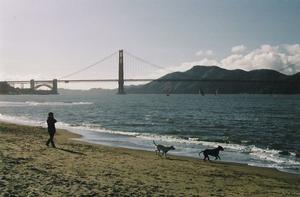
From the NPS website, we see gleeful, off-leash dogs on East Beach.  The NPS proposes to convert this section to on-leash only.

From the NPS website, we see gleeful, off-leash dogs on East Beach. The NPS proposes to convert this section to on-leash only.

This post will touch on some aspects of the ongoing efforts to develop dog policy in the Golden Gate National Recreation Area (GGNRA), especially in the Area’s acreage in San Francisco.

The GGNRA is a U.S. National Recreation Area encompassing 125 square miles of terrain on the western side of San Francisco Bay, a significant portion of San Francisco and Marin Counties. GGNRA is managed by the National Park Service (NPS) and is one of the most visited units of the National Park system in the United States, with over 14.5 million visitors a year. It is also one of the largest urban parks in the world, with an area two-and-a-half times that of San Francisco.

San Francisco’s 825,000 residents are the companions for more than 120,000 dogs, which outnumber the City’s children. Dogs and their companions like fresh air and off leash play, and therein lies the potential for conflict with others including some visitors to GGNRA.
For over 10 years the NPS has been working to codify dog rules within GGNRA such that NPS rules are followed and the needs of users and wildlife are balanced reasonably. This hasn’t been easy for the NPS – the subject has been the topic of large studies, many public hearings, over 10,000 written public comments, and litigation. Even though many millions of dollars and untold man-hours have been spent on the subject, it is still unsettled. However, the NPS is grinding forward with a plan described in 12.2 pounds of paper which it plans to implement in 2015.

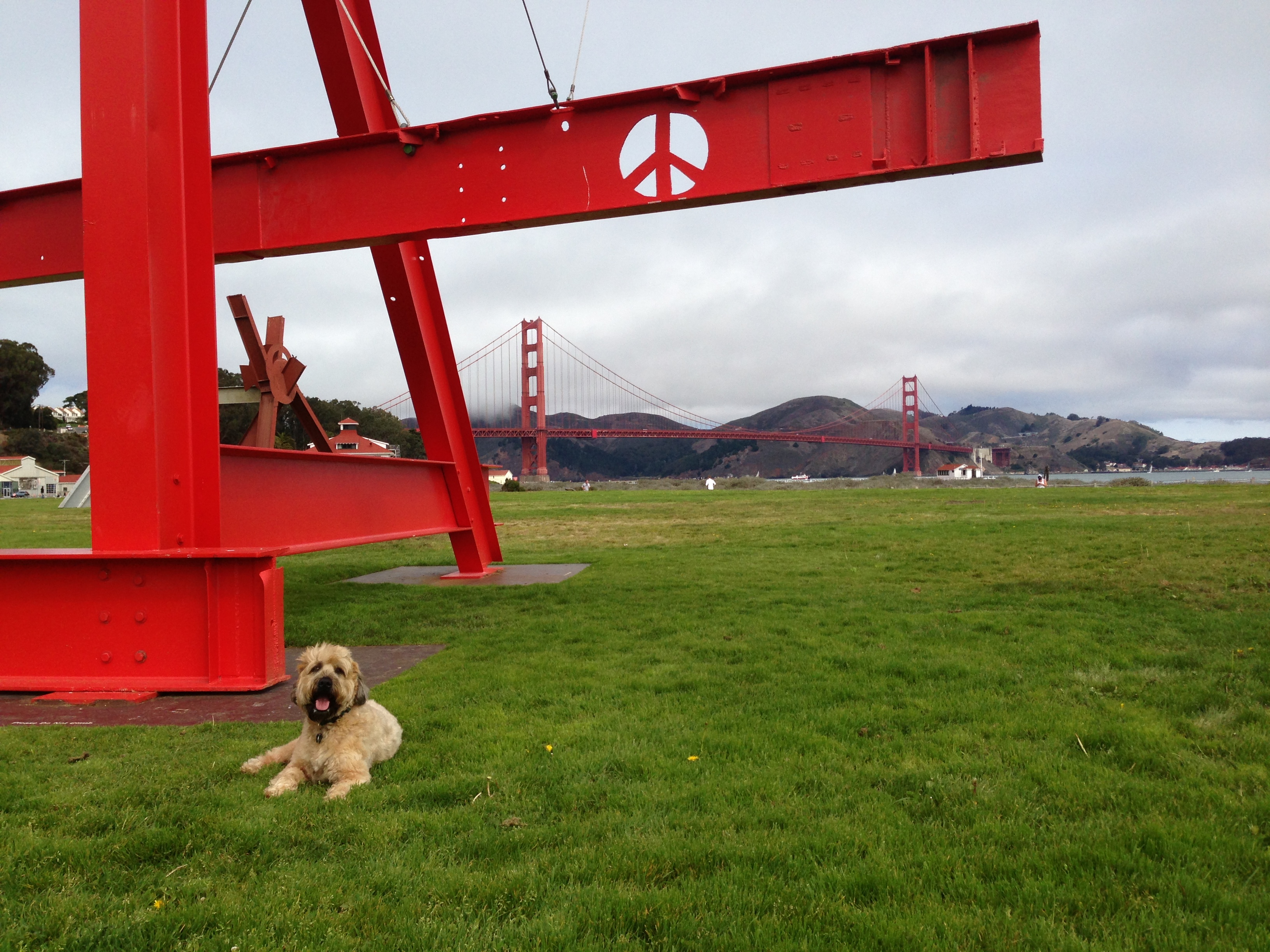
Crissy Field is the temporary site of several very large creations by Mark di Survero including this one that was last in San Francisco in 1972.

Crissy Field is the temporary site of several very large creations by Mark di Survero including this one that was last in San Francisco in 1972.

Some of the background on the matter may be gleaned from the following web pages and newspaper articles:

NPS’s Dog Management home page.

NPS’s Draft Dog Management Plan/SEIS (Supplemental Environmental Impact Statement).

NPS file containg 4118 pages of comments for the 2011 EIS.

GGNRA managers unleash dog-walking rules – SFGate

City Crackdown Looming as the Dog Population Rises – NYTimes

San Francisco Debates a Proposal to Limit Where Dogs Can Roam – NYTimes

Supervisor Wiener Calls for a More Balanced Dog Walking Plan

One of the GGNRA’s more contentious areas in that of Crissy Field, especially East Beach, probably the most popular dog play area in GGNRA. This is a section of beach nearest the parking lot which is used everyday for off-lease play by many dogs. The NPS plan would revise the policy on East Beach to on-leash only. A future blog entry will discuss this.

New Year's Day, 2012, dogs love to play in the mini-surf.

New Year’s Day, 2012, dogs love to play in the mini-surf.

Posted in Outdoors, San Francisco | 1 Comment

America’s Cup recap part 2

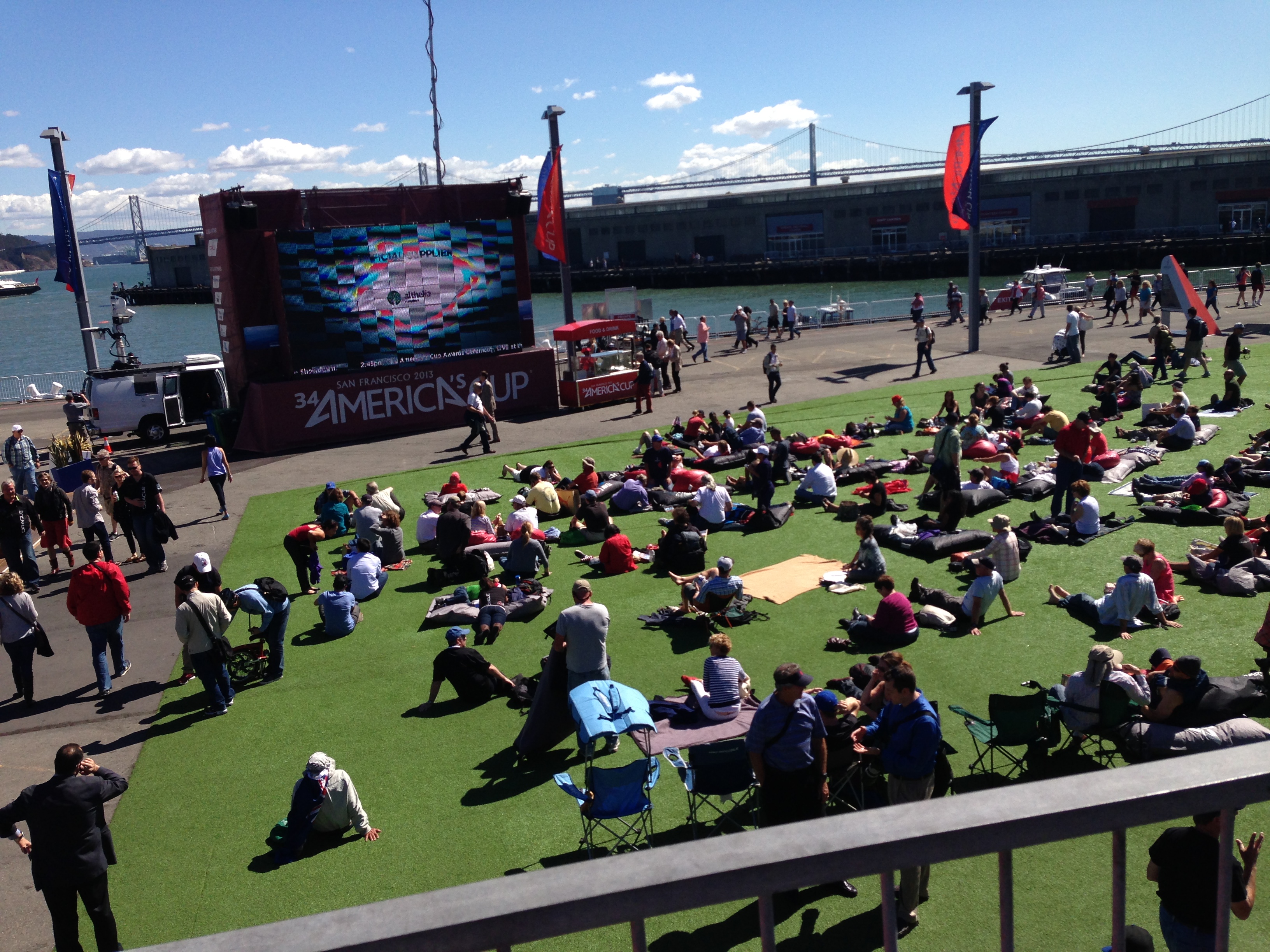
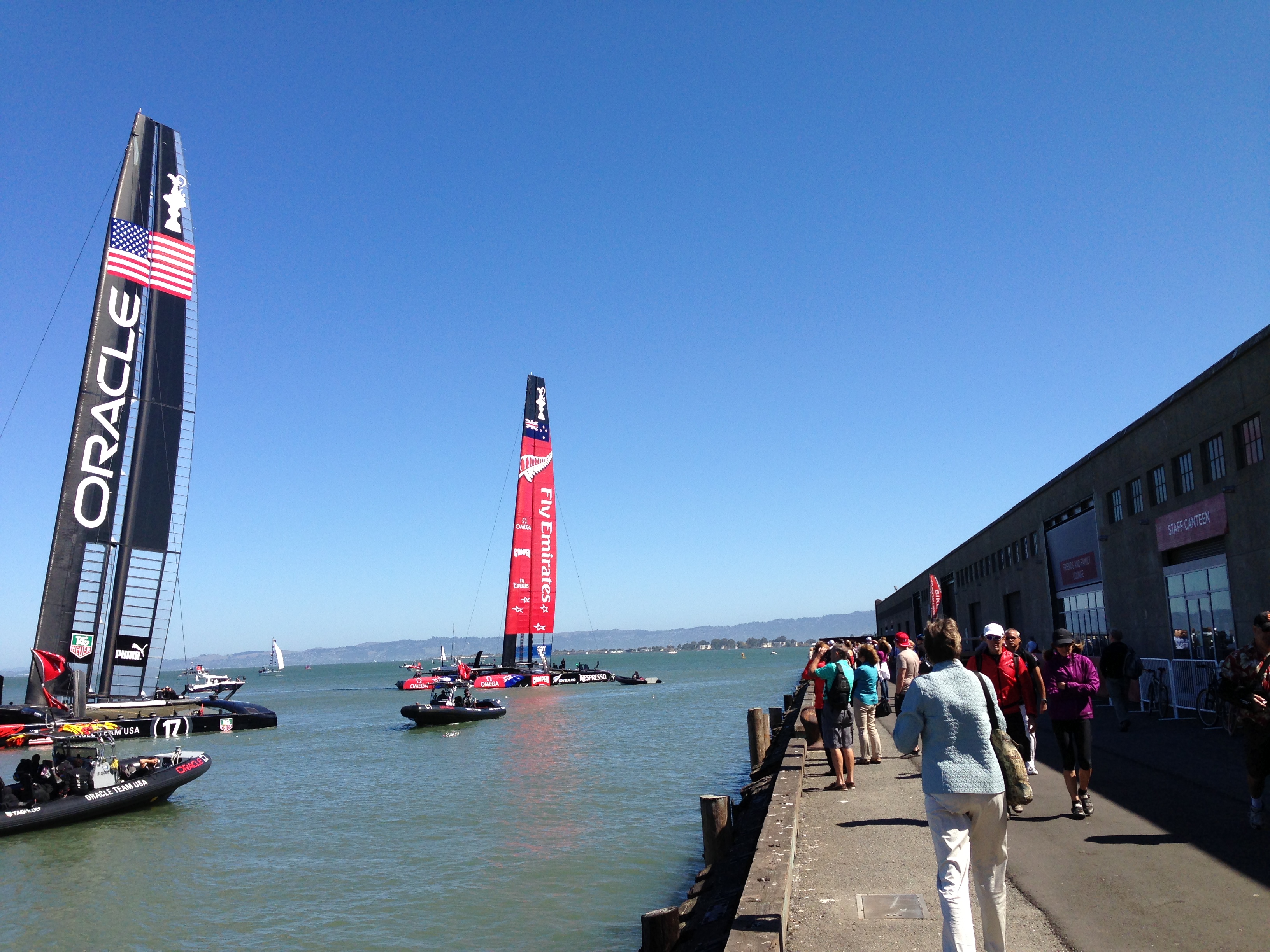
These photos were taken at the AC Village on/near Pier 27 the day of the last race.

Viewing area an hour before last race

Above: Viewing area on Pier 27 about an hour before the last race
Below: Rivals anchored off Pier 27 before the race

Rivals "anchored" near Pier 27 before last race

IMG_0433

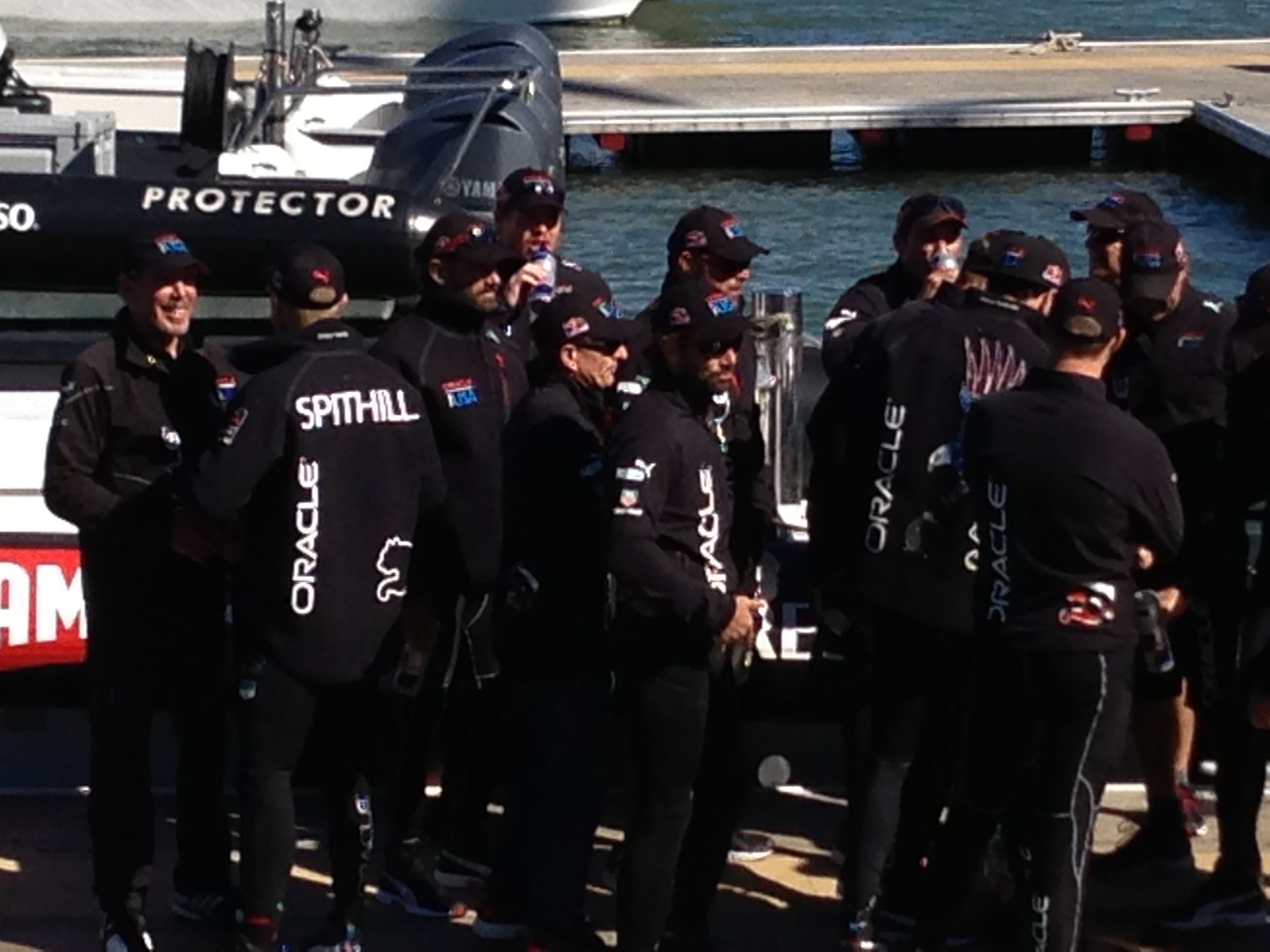
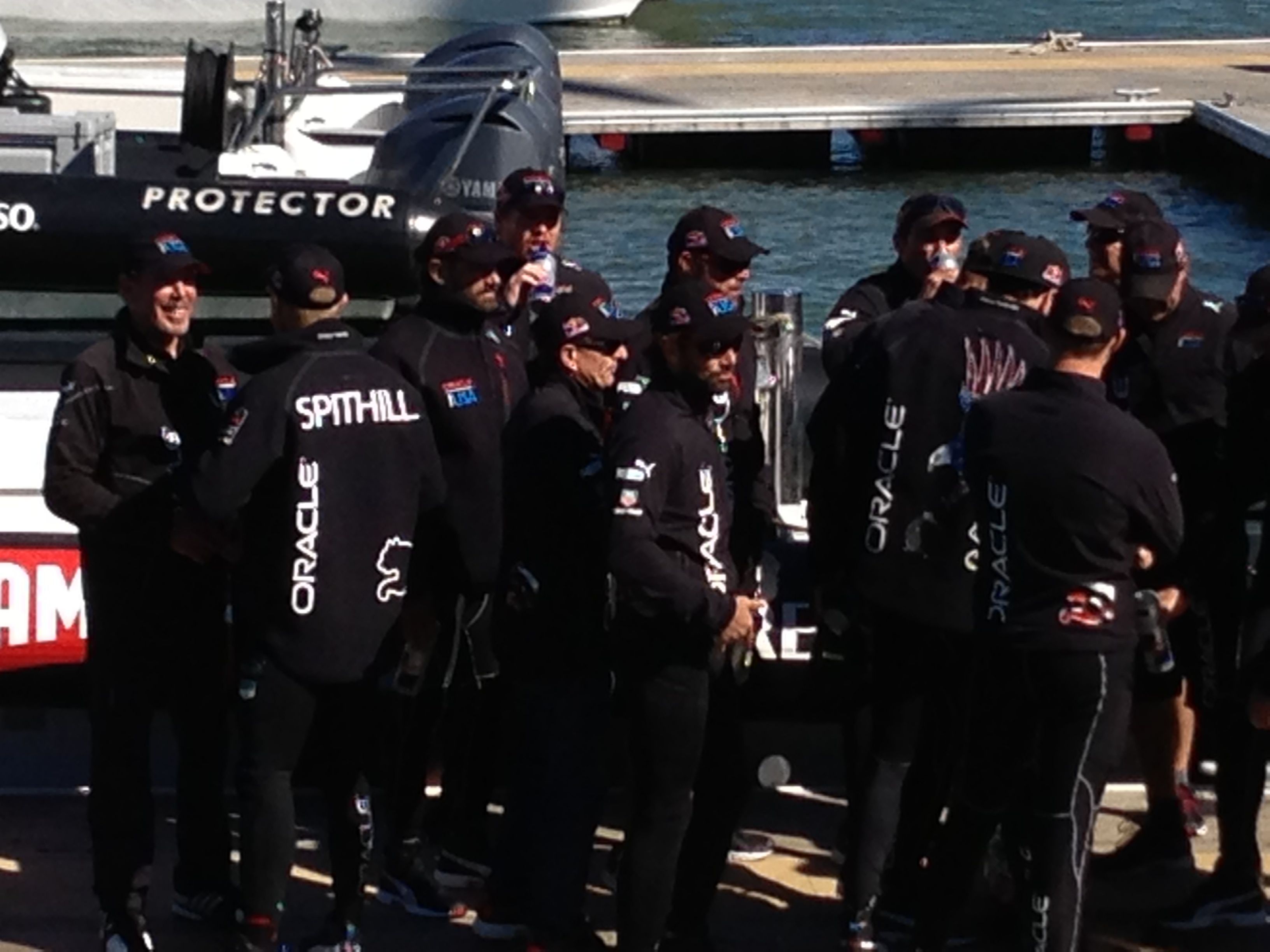
Above: Jimmy Spithill, skipper of Oracle USA, shares a smile of satisfaction with team owner Larry E. on the Pier 27 dock as they await the award ceremony.

Below: Hands raised as America’s Cup is presented to Oracle USA.
Hands raised as Oracle team is presented the Cup

Posted in Outdoors, Saltwater, San Francisco | Leave a comment

Film Festival “Industry,” in brief

The film festival industry (or marketplace) is quite fragmented. Although many have heard of Sundance, Toronto, and/or San Francisco International, there are thousands of other film festivals known to only locals or enthusiasts. To get a flavor of the variety of festivals, check out festival databases such as http://www.filmfestivals.com/ and http://www.festivalfocus.org/.

Within the film festival marketplace, there are various specialized festivals that confine their offerings somehow: by film types, such as animated, shorts, short non-fiction, 1 minute, etc.; by subject matter, such as food, animals, a country or geography, etc. In San Francisco alone we can choose from over 20 film festivals including:

American Indian Film Festival
Armenian Film Festival
Bicycle Film Festival
International Buddhist Film Festival
Lunafest
United Nations Association Film Festival

Worldwide, many festivals might be termed “environmental” film festivals – included would be the popular, well established, 17 day long Environmental Film Festival in the Nation’s Capital. A relative newcomer is the San Francisco Green Film Festival, started in 2009 by the highly competent local cinephile, Rachel Caplan.

A growing niche is that of geography based festivals, such as mountain film festivals. While I don’t have a good count of mountain film festivals yet, they have their own association, the International Alliance for Mountain Film. From its website:

“The International Alliance for Mountain Film (IAMF) was instituted to promote, enhance and conserve mountain cinematography through communal projects that would flank or be incorporated into the regular institutional activities of the member bodies. Today the IAMF numbers 21 Members: 20 festivals of mountain film and a museum, which represent 16 countries of Europe, Asia, and North and South America.”

One of the IAMF members, the Banff Mountain Film Festival, served as a loose model at the founding of the San Francisco Ocean Film Festival, a subject I’ll cover in a future post.

Posted in Books & Films, Non-profits | Leave a comment

America’s Cup recap

“He who has the gold makes the rules.”

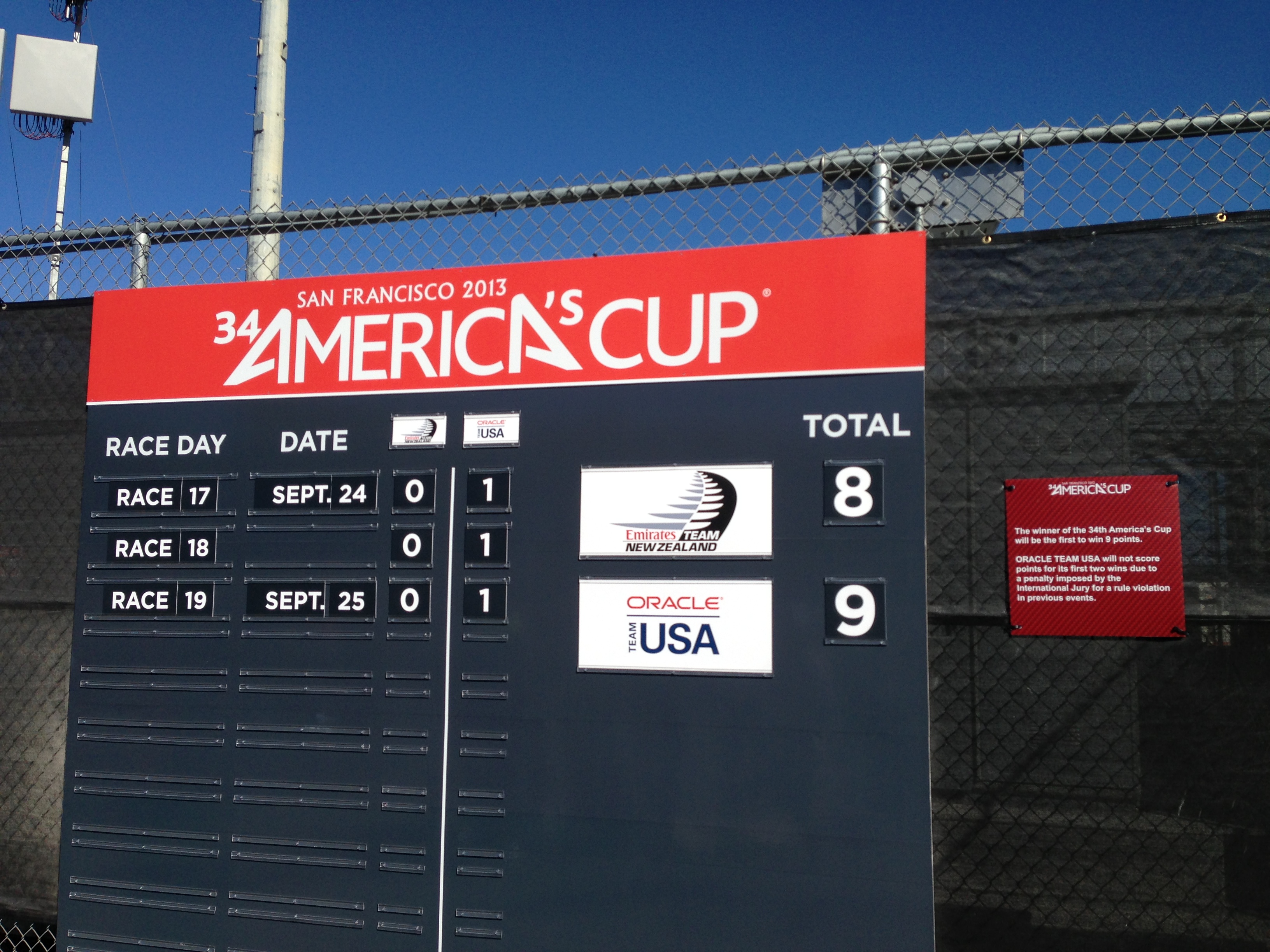
In this year’s America’s Cup, the defending Oracle US team achieved what some have called the biggest comeback ever in all of sports. Down 8-1 to Emirates Team New Zealand, Oracle won the next 8 races to become the first to 9 wins and thereby retain the Cup.

The competition was held on San Francisco Bay, where family, friends, and/or my dog recreate every day. It was an event that’s been hyped in San Francisco for over a year, so it was hard to ignore.

However, for most of the competition, which started in mid summer with 3 challengers, it was pretty much a non-event. Then, in the finals, when New Zealand took the large lead, many locals knew it extremely unlikely that Oracle would prevail and stopped showing up.

So, after 9 races, excepting aficionados and tourists from New Zealand, the Bay Area’s interest in the Cup was pretty low – but then, with each Oracle win, interest began to build. Oracle finally did prevail, evidently in a “fair and square” way, by tweaking the boat to perform better, by changing their approach to route selection, and by improving their onboard teamwork.

A week ago, the day after the final race of the 2013 Americas Cup, I sent the following email to a former neighbor and friend from New Zealand I hadn’t seen for a while:

Tony,

Been thinking about you as the New Zealand boat kept losing races. Don’t know if I’ve ever seen a top flight competitor as distraught as Dean Barker was Monday and, especially, yesterday – both L***** & I feel for him and his crew.

They should hold their heads high and be proud, not down. I have a sense Oracle outspent NZ big time, allowing Oracle to hire better, pay more overtime, have more experts on the tuning job, etc., etc. It’s hard to beat an extremely competitive multi-billionaire who wants to win at almost any cost. One can only imagine what may have gone on behind the scenes…we may never know.

L***** & I were down at Pier 27 yesterday and saw up close the teams as they arrived for the award ceremony.

Hope you’re well.
KJ

Looking back on that email, it continues to encapsulate my impression of the Cup and my sympathy toward Dean Barker and the entire New Zealand team.

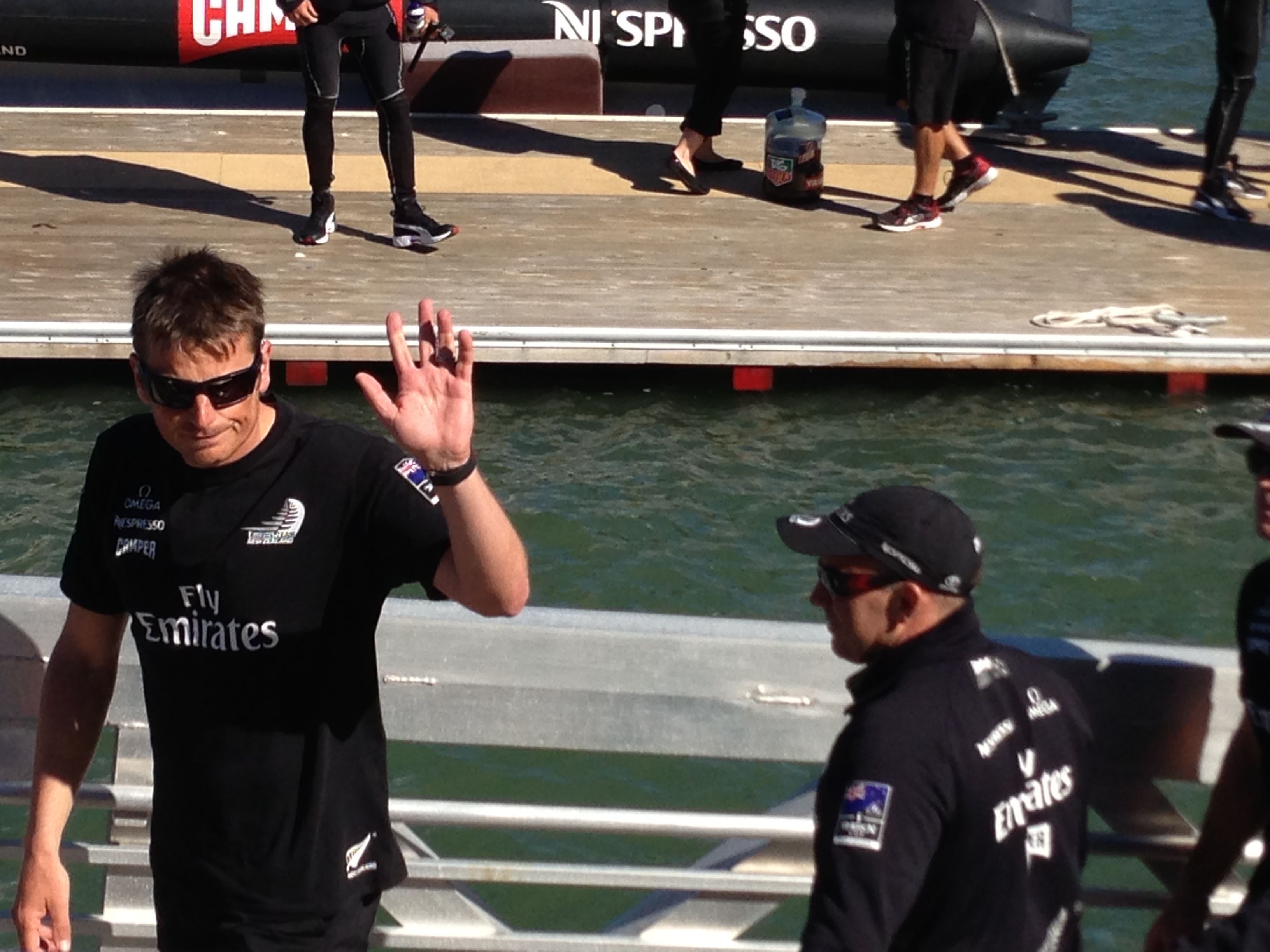
NZ's Dean Barker on way to AmCup awards ceremony.

NZ’s Dean Barker on way to AmCup awards ceremony.

Not to take anything away from Oracle – they worked really hard (as did NZ), improved, and performed on the water.

Larry Ellison and Oracle Team upon arrival for awards ceremony

Larry Ellison and Oracle Team upon arrival for awards ceremony

For much more on Americas Cup and the backstory involving the Golden Gate Yacht Club, see the following:

1) On the America’s Cup and the races, the very excellent site by Jack Griffin, CupExperience.

2) Contemporaneous stories by San Francisco Chronicle reporter, Tom Fitzgerald at sfgate.com

3) For some backstory on the host club, the Golden Gate Yacht Club, this New York Times article. And this.

After race #17, the final's scorecard.

After race #17, the final’s scorecard.

Posted in Outdoors, Saltwater, San Francisco | Leave a comment