Berea High School (Ohio) ’62 Scholarship

I have fond memories of growing up in Berea, Ohio and my 3 years at Berea High School, where I had 360 or so classmates, many of whom are friends.  A couple of
years ago, in conjunction with my Class of 1962’s 50th reunion, I undertook an effort to create, with the help of classmates, a scholarship for seniors at Berea High.

The scholarship was created with the assistance of The Education Foundation (TEF), a local non-profit that supports Berea schools and teachers.  I’m pleased to say three ’62 scholarships have been awarded and it looks like the scholarship will soon be fully endowed.

A near term “to-do”  is to work with TEF to develop a checklist of best practices, a roadmap, so other classes can more easily create scholarships in the class’s name.
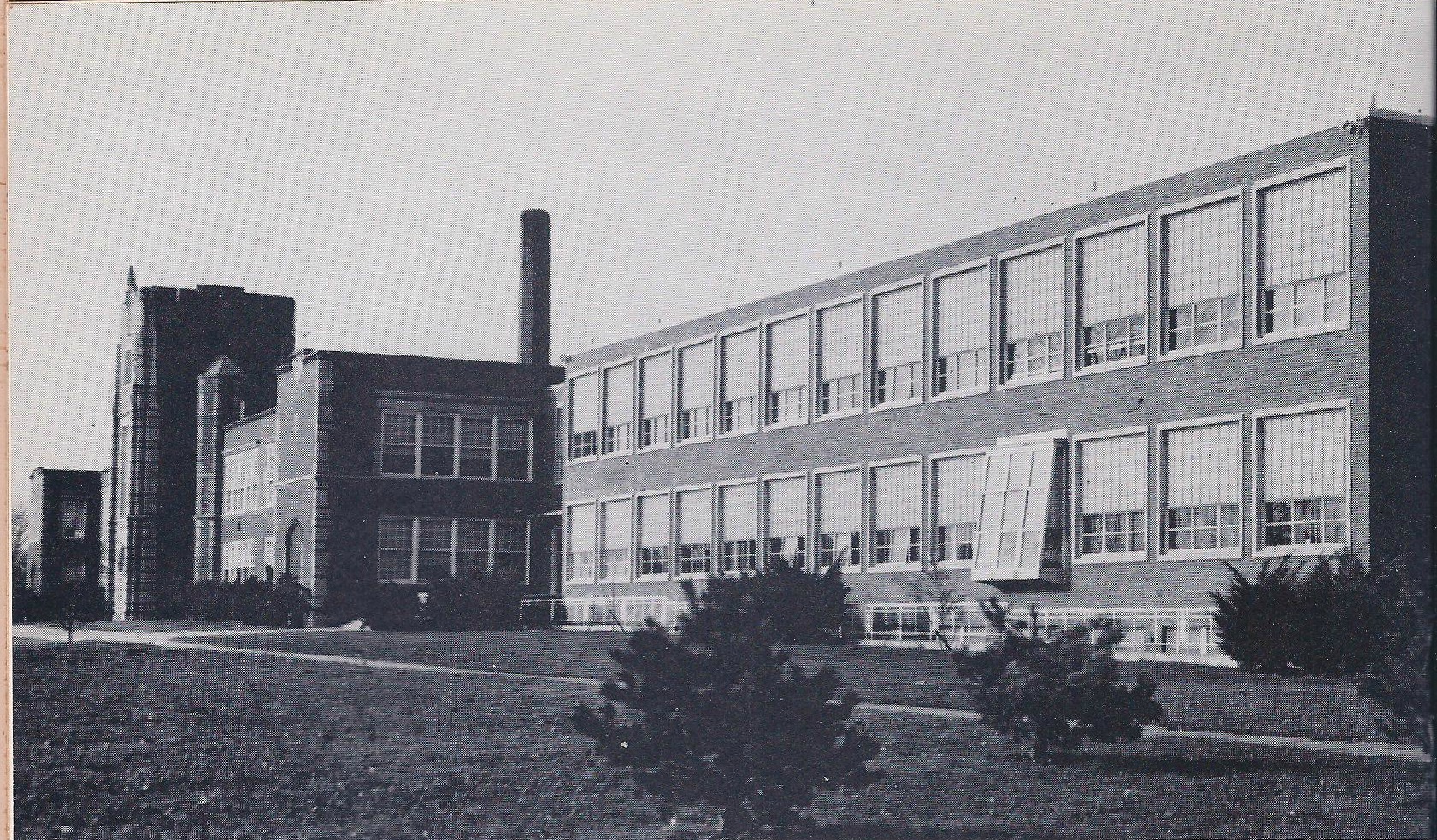
Berea High School

Berea High School

Below is a recent email sent to the 45 or so donors with more details.  (BTW, if you’d like to make a tax deductible gift to the fund, go to BereaHigh62.org where you may do so easily.)


Dear Berea High ’62 Classmate,

Thank you for your support of the Berea High School ‘62’s Scholarship fund at The Education Foundation (TEF). Your gift, along with those of over 40 ’62 classmates, has enabled the award of three $500 scholarships to BHS graduating seniors, each of whom is attending college in Ohio. Also, thanks to donations since our 50th Reunion from several classmates, our scholarship fund at TEF has grown to $8,814.20.

The first three ’62 Scholarship recipients are:
Danielle Wolfe, BHS Class of 2012, who attends Heidelberg University
Samantha Carson, BHS Class of 2013, who attends Ashland University
Sarah Strinker, BHS Class of 2014, who attends Ohio University.

More on the recipients can be found at http://BereaHigh62.org.

This past spring TEF awarded 22 scholarships including ours. Recipients of scholarships issued by TEF are chosen by a committee of local adults familiar with the Senior class members; for each scholarship, the committee works from guidelines provided by the scholarship’s sponsor. In the case of ’62, our guidelines are that the student be academically able, have demonstrated service to the local community, and be in need of financial support to continue his or her studies beyond high school. Also, our class asked that the selection committee strive to select a deserving student who might otherwise be overlooked by local scholarship grantors.

The Education Foundation
Since it’s inception in 1996, TEF has awarded over $400,000 in grants and scholarships to Berea School District recipients – it’s a significant resource to area students and teachers.

’62 classmates volunteer at TEF: Consolina Templeman is serving on TEF’s Board of Trustees, while ‘62’s Don Auble is Trustee Emeritus.

TEF is a 501(c)(3) so all donations are tax deductible to the full extent of the law.

Summary
In connection with our BHS ’66 50th Reunion, class members created a scholarship fund which so far has provided $1500 to three BHS Seniors for their college expenses. From the results to date, we’re encouraged to strive for an endowed scholarship fund, which will be met when our fund reaches approximately $14,000.

I’d like to convey my personal thanks to each of you for your support of TEF and the ’62 Scholarship. Also, TEF and I offer incremental thanks to those of you who met in 2012 by phone to discuss the creation of a scholarship fund.

Since each of our social circles is unique, please consider reaching out to additional classmates who might be open to supporting the ’62 Scholarship fund at TEF.

Warm regards & Season’s Greetings,

Krist Jake
(415)385-0100
http://kristjake.com

Housekeeping:
Donations to TEF can be made by credit card or PayPal at http://BereaHigh62.org, or by check or securities to its office at 390 Fair Street, Berea, OH 44017. If making a gift other than by Paypal, please identify yourself as a member of ’62. For questions on TEF, contact Kim Dettmer, Executive/Development Director, at (216)898-8270 or kdettmer@berea.k12.oh.us. For questions on the ’62 scholarship, feel free to contact me anytime.
We were proud to be the "Berea Braves"

We were proud to be the “Berea Braves”


Posted in Berea High School, Best Practices, Non-profits | Leave a comment

Martin Litton (1917-2014)

On December 1 I tweeted a link to a San Jose Mercury News article on Martin Litton, who had just passed away.  The article begins “Tireless, fearless and often rambunctious, Martin Litton devoted more than 60 years of his life to protecting the natural beauty of the West, from stopping dams in the Grand Canyon to preserving California’s ancient redwoods and sequoia forests…”

A few days later there was  a New York Times obituary.  This morning an email from the Adventure Travel Association provided a link to its article on Mr. Litton, which in turn provided a link to an excellent article at O.A.R.S., the largest river-based adventure travel company in North America.

A trail blazing entrepreneur, in 1971 Litton founded Grand Canyon Dories and guided in the Canyon for many years; in 2001 he founded Sequoia ForestKeeper and remained active with it until his death.  On its tribute page on Litton, Sequoia ForestKeeper states:

“Martin Litton spent his 97 years walking on this earth with a single mission: to lessen man’s impact upon the natural world. Whether protecting Giant Sequoias or giant rivers, he was at the forefront, educating the public and legislators about why reducing forests to rubble and damming rivers until they are a trickle were bad ideas. Martin’s legacy will live on with the ancient sequoias and will be told in the geologic timetable that is found on the walls of the Grand Canyon…”

Bottom line, Martin Litton lived his life fully & well.  He was an adventure travel pioneer and an entrepreneur in business and advocacy.  My sense is he wasn’t particularly well known outside the environmental circles he operated in, so this post is to make visible my respect and provide his life with a little more visibility.

I’m sorry I never met Martin Litton.  However, years ago, before email, I picked up the phone and called him about his dory operation in the Grand Canyon. We had a  cordial 10-15 minute phone conversation – but he was having too much fun showing customers the river & canyon to consider selling his truly unique business.  It was of course a large part of his identity.

Martin Litton, R.I.P.

Posted in Entrepreneurs & Entrepreneurism, Non-profits, Outdoors, People of note | Leave a comment

Domains #6 – new gTLD update

Since I wrote last February on new domain extensions (gTLDs – general Top Level Domains), approximately 450 additional gTLDs have been launched. There are an additional 1000+ new gTLDs in various stages of approval and preparation for launch. With almost 10 months of history since my comments in February, combined with my continuing interest in this market, it seems like a good time to circle back a bit to the subject of gTLDs.

First, let’s look at stats for the new gTLDs that launched January 25, 2014, along with the “Big 3” of .com, .net, and .org:

gTLD # @   2/11/14 # @   12/8/14 Change in # % change
COM 112,299,985 115,260,124 2,960,139 2.6%
NET 15,177,201 15,050,572 -126,629 -0.8%
ORG 10,396,495 10,482,829 86,334 0.8%
GURU 25,393 76,884 51,491 202.8%
BIKE 6,031 13,503 7,472 123.9%
CLOTHING 5,450 14,258 8,808 161.6%
SINGLES 3,959 7,955 3,996 100.9%
VENTURES 3,047 7,218 4,171 136.9%
HOLDINGS 2,032 6,141 4,109 202.2%
PLUMBING 1,961 5,057 3,096 157.9%

The new gTLDs were 2.5 weeks old on February 11, 2011. Comparing current stats with those from then, we can easily observe:
1) the January 25 cohort of new gTLDs (.guru on down in the above table) have grown similarly, except for .guru which has outpaced the others in the cohort.
2) these new gTLDs have a long, long way to go before they substantially impact the overall domain registration count, which is dominated by .com.

Retail pricing of the January 25 new gTLD cohort is approximately $24-$42/name (at GoDaddy, a competitive vendor). Assuming wholesale prices are approximately the same, it seems clear that the new gTLD business (as a registry, the “manufacturer”) is not yet an unvarnished bonanza.

Nonetheless, there are some notable early “success” stories, namely the .club registry along with new gTLD applicants who have gone to the “shootout” at ICANN and walked away with $millions.  These subjects will be discussed in a future post.


Posted in Domain Names | Leave a comment

Book Review: Semisweet, An Orphan’s Journey Through the School the Hersheys Built.

Semisweet is a memoir of a portion of a most improbable journey.  It was written by John A. O’Brien, one of my teammates on Princeton University’s most recent undefeated football team, v. 1964. In October of this year over a weekend on campus, nearly all of the team celebrated the 50th anniversary of that season; friendships were renewed and refreshed including mine with “Johnny.” It was at that reunion that another teammate volunteered to me that Semisweet was “a really good book” and I certainly agree.

Although I had always counted Johnny as a friend, he was one of dozens on that team. So until reading the book, I wasn’t aware of his challenging and most unusual pre-Princeton life or his subsequent total engagement with the residential institution that was his home for 15 of his first 18 years.

In 1947, when he was 3 years old, John A. O’Brien was delivered to The Milton Hershey School along with his mentally challenged 5 year old brother, allegedly because their parents had just been killed in an auto accident.

Wealthy then, the MHS has become the richest K-12 school in the world with an endowment of $12 billion, largely from its ownership in and control of The Hershey Company (think “chocolate”) and related entities. Today MHS’s endowment exceeds, for example, Stanford’s and those of all but a few other universities.

MHS was created in 1909 by Milton Hershey, founder of The Hershey Company, as a school for the poor. After Mr. Hershey’s death MHS’s governance became inbred and late last century led it to stray from the founder’s mission. As the MHS began to change from being a refuge for extremely needy children to more of a middle class prep school, its community of graduates became concerned. A decade of discussion, lawyers’ bills, and national publicity ensued, with Johnny as one of the alumni group’s principal actors.

In a turn that would challenge the believability of any story, Johnny was selected to be MHS’s 8th president in 2003, tasked with restoring the mission, morale, and character-enhancing culture of the school. In addition to being an accomplished grad of MHS and a leader in its alumni community, Johnny’s credentials included a career in which he trained thousands of employees in scores of corporations in leadership and team building. We can only guess that, when he returned as President to “Johnny Comes Marching Home” playing in the school auditorium, some of the Board of Managers’ fingers must have been crossed.

So this book is a first hand look at growing up as an orphan, with a less fortunate brother, in a truly unique institution. Johnny’s life from Princeton onward is lightly covered but sufficiently enough to establish his credentials to lead the school back to the founder’s path.

The discussions of the Board of Managers and governance issues will be familiar in concept to many who have served on a board. But here the details are affected by the very large dollars involved and the unusual, flip-flopping behavior by the State of Pennsylvania,

The writing is always authentic and in many places quotable.

It is midway through the book, just as Johnny is to graduate from Milton Hershey School  in 1961, that he learns the “auto accident” story was a ruse put upon the O’Brien brothers by the school and caring relatives. Using a handgun, his father had killed his mother. This led to a conviction for first-degree murder and a sentence of state prison for life. Relatives weren’t in a position to take the 2 boys in so they searched for and found an acceptable environment for the boys in the form of the MHS.

A few years after graduating with his Princeton ’65 class, when reviewing the documents relating to his father’s actions and conviction, Johnny became concerned. Thus, another strand surfaces in Johnny’s life, his effort to have his father’s extensive jail sentence terminated because of poor lawyering in 1947.   Although Johnny’s efforts led to his father being freed, they never enjoyed a warm & cuddly relationship.

His brother, having spent his entire adult life in mental institutions, died in 1997.  With their widely divergent life paths plain to see, Johnny’s concern for his bro and comments on mental health care offer another layer to this book.

The last chapter of Semisweet is titled “Lessons Learned.” Very, very few have had a life with such extreme twists, turns, complex relationships, and successes so the Lessons cited are both practical and highly credible.

In summary: Highly recommended.

For further reading on Johnny O., see the February, 2004, Princeton Alumni Weekly article titled “Going Home.”

Posted in Books & Films, Entrepreneurs & Entrepreneurism, Non-profits, People of note, Princeton | Leave a comment

SF Ocean Film Festival – Birds & Rowing

At a recent college class reunion I was asked to screen a program of film selections from the San Francisco Int’l Ocean Film Festival, which my wife and I founded in 2003.  The program that evolved, a sampler on ocean-related subjects, was well received and is encouraging me to give additional visibility to ocean films which I’ve seen and like.

After the screening a classmate’s wife expressed an interest in birds and rowing, so I promised her a list of some of the films the Festival has screened with such subject matter. In creating a list for her, it occurred to me that the films, at least in my opinion, deserve a wider audience, so I’m publishing it below fyi.

Please note: the descriptions provided are generally courtesy of SFIOFF.  Where initials are present, the descriptions are by the talented and committed SFIOFF volunteers MaryJane Schramm and Sid Hollister.  

Bird films:

Arctic Cliffhangers, (Canada), Julia Szucs, 60 mins, In this dazzlingly photographed and adeptly scored film, biologists cling to vertiginous, wind-whipped cliffs on remote islands in the Canadian Arctic to study breeding seabirds. Over 300,000 murres, fulmars, and kittiwakes encrust every ledge on these 800-foot precipices. The scientists are conducting long-term studies to see how changes in ice conditions affect the birds, which may foretell more widespread changes. —MJS

Project Puffin: Restoring Puffins to the Coast of Maine (USA) Daniel Breton, 20 mins.  
Atlantic puffins can live to 30, have a call like a creaky hinge, and sport an outrageously large and colorful bill. They are also considered good eating by people and gulls—hence their near demise on Maine’s coastal islands. It took eight years to lure them back to their former nesting sites in a project that has since been a model for other efforts around the world. — SH

Returning Home: Bringing the Common Murre back to Devil’s Slide Rock(USA) Kevin White, 24 mins.  
In 1986, an oil spill devastated the colony of Common Murres at Devil’s Slide Rock near San Francisco. With a biologist’s version of “smoke and mirror” technology and the help of local schools and government agencies, these birds are once again breeding on their ancestral home. — MJS

Tracking Alaska’s Godwits, (USA), Eric Liner, 20 mins, For seven months she gorged, doubling her weight. Then the Bar-tailed Gotwit, E7, set off on a non-stop, 7145 mile flight from Alaska’s Yukon River Delta to New Zealand’s North Island. Her ocean journey astonished the world. Scientists now track other Godwits on that route, and on their return, to help protect a bird that in Maori legend accompanies the departed to the next world. –SH

Rowing & kayaking films:

Another World (Le Troisième Monde)
 (Prize winner, FIFMEE 2005, Toulon, France)
 52 min, France, 2005. Steve Moreau.  
Holed up with even a best friend can get on your nerves, often sooner than later. Rowing across the Atlantic with someone who doesn’t speak your language, two hours at the oars and two hours off, day and night, for months, is impossible.  This indomitable Frenchman and Englishman prove otherwise. —SH

Birthplace of the WindsQuoting filmmaker Jon Bowermaster: “A three-week long journey – from California, through British Columbia and Alaska – delivered us to one of the loneliest and least known spots on Earth (halfway between Russia and Alaska), where the Pacific Ocean and the Bering Sea collide at what the Aleuts called ‘the birthplace of the winds.’ Our goal was to kayak among five volcanic islands rising straight out of the seas, and climb their snowcapped peaks.”

Dubside(Canada) Bryan Smith, 11 mins  
Into a bag and onto a bus—that’s how car-free Dubside gets his folding kayak to his paddling put-ins. Deftly handling that kayak is no mean feat, but it’s nothing compared to how Dubside folds and unfolds himself when he’s roping and rolling. — SH

The Men Who Would be Viking.  
60 min, (US) 2003.  
New England explorers attempt to retrace Leif Eriksson’s voyage in their own Viking ship.  Screened at Festival #1, filmmaker Doug Cabot traveled from the East coast and was in attendance.

Row Hard No Excuses
 10 min, (US) 2004
.  Documentary-in-progress about two middle-aged Americans who participate in the Atlantic Rowing Challenge.

Rowing the Atlantic* (USA), J.B. Benna, 25 mins, Ocean adventurer Roz Savage undertakes a 3,000-mile trans-Atlantic row—solo—that becomes a trial by sea and the challenge of a lifetime. Towering waves, heaving swells, and a pestilence of blisters are capped only by a cascade of equipment failure, including all satellite communications. Meanwhile, a camera records those harrowing and inspiring moments. —MJS 

Scottish Tidal Races
(UK) Justine Curgenven, 15 mins
Fools rush in, they say, and when you see what these sea kayakers paddle into, you have to wonder. Among Great Britain’s best at their sport, they meet their match on Scotland’s west coast where tides rush out of deep firths, or inlets, to create inviting waves and treacherous boils and whirlpools. — SH

*kayaking

I fondly recall the films listed and recommend all.

P.S. Since the first annual Festival in 2004, the San Francisco Int’l Ocean Film Festival (SFIOFF) has screened approximately 500 ocean-themed films. A database of films and their details such as subject matter is a work in process and the above isn’t warranted to be a comprehensive accounting of all the bird and rowing films screened at SFIOFF.

Posted in Books & Films, Non-profits, Outdoors | Tagged | Leave a comment

3 Museums in Maine that were well worth the visit

A benefit of planning a trip with a flexible schedule is the ability to adapt the itinerary to suit one’s mood, changed circumstances, or new information.  On our recent trip to New England, we left San Francisco with white space on our calendar/schedule that was easily filled in with interesting stops as we learned along the way.

 Before leaving California, we planned on a several stops in Maine: Portland and Biddeford to see friends, the DeLorme Map store in Yarmouth, LL Bean in Freeport, and Acadia National Park and nearby Bar Harbor.  When we were in Portland exploring in Sherman’s bookstore, we noticed a good looking book entitled Maine’s Museums, Art Oddities & Artifacts.  With a title that is right on this author’s preferences, the book is a cornucopia of places for discovery and, lucky for us, it was on sale that day.

 As one might expect or hope, the book drills down on Maine and its uniqueness, and offers an extensive yet curated selection of Maine’s museums – many are quite specialized and would probably be overlooked by travelers not informed by such an impressive guidebook.

 Maine’s Museums thoughtfully presents its data on 70 or so museums by geography.  We simply traced our route between Portland and Bar Harbor, learned what museums were along the way, and then made time for a few of them.

 Traveling from the wonderful Pilgrim’s Inn on Deer Isle southwest toward Portland, first up was The Wilson Museum in Castine.  This town is off the beaten track and was a diversion even for us, but it was well worth the effort.  A small, scenic community on the

Downtown Castine is home for Maine Maritime Academy's training ships.

Downtown Castine is home for Maine Maritime Academy’s training ships.

water, Castine boasts 300 healthy elm trees, an arborist on city staff, the Maine Maritime Academy, and the small but impressive Wilson Museum.

 Dr. John Wilson (1871-1936) was borne into a family of successful industrialists, became a geologist, and travelled widely.  He assembled a collection of rare objects that are well presented in the museum’s attractive waterfront facility.  Scholars travel from afar to study the rocks, fossils, and implements from the earliest of times.  The museum presents humankind’s advances in tool-making from pre-history through Castine’s rich local history.

Leaving Castine and rejoining US#1, we headed southwest again, passing Red’s Eats, a lobster shack with an excellent PR department.  We continued on to Bath, which enjoys  a rich history of shipbuilding beginning in 1743 – today the city is a key supplier of warships to the U.S. Navy, including the first in the new Zumwalt (DDG1000) class of destroyers ($3.5 billion a copy).

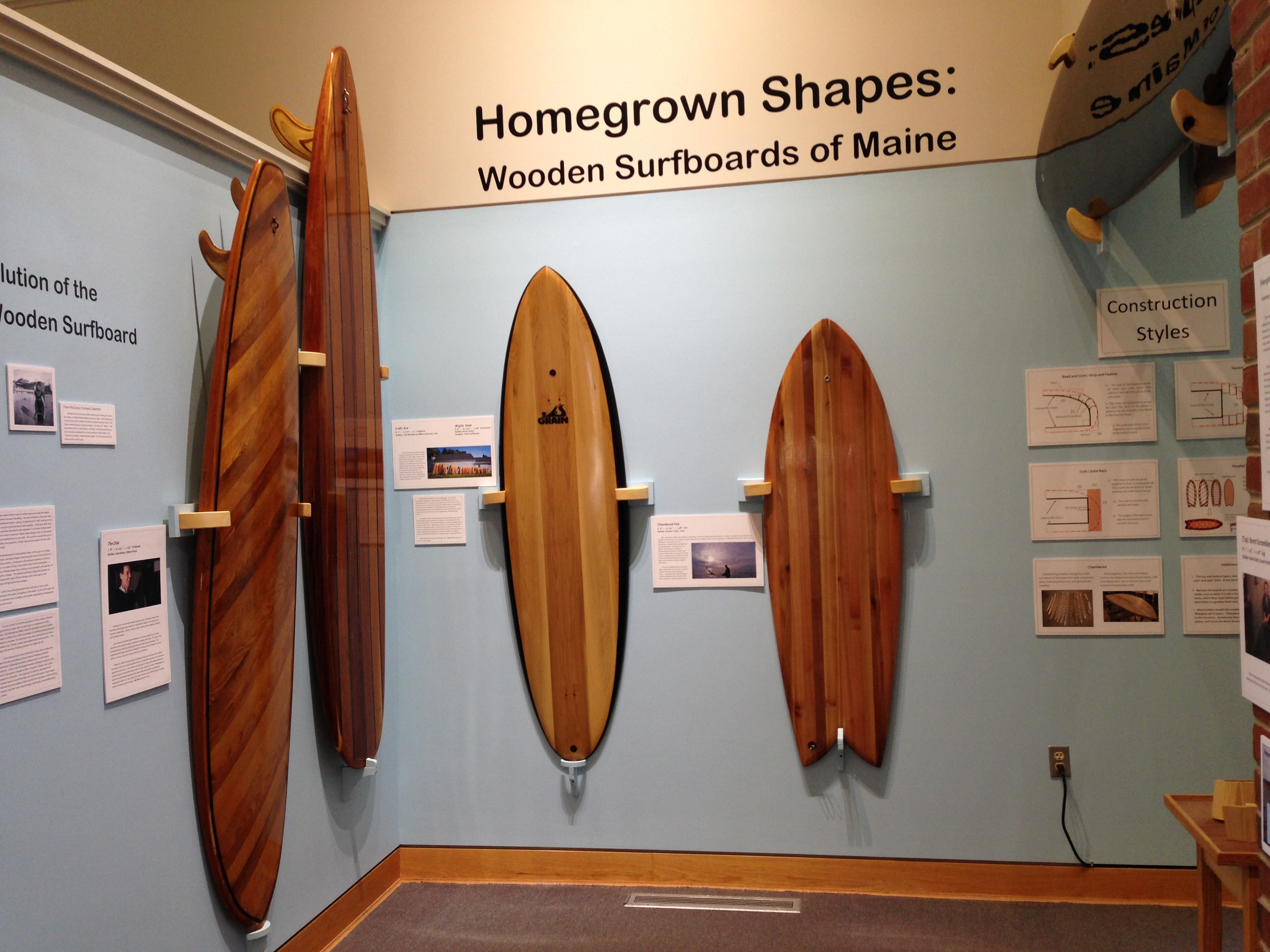
Bath’s rich history of shipbuilding makes it a natural location for the Maine Maritime Museum, founded 1962.  Located on the Kennebec River just downstream from Bath’s attractive downtown, the museum has an interesting variety of permanent exhibits which are supplemented with solid temporary exhibits.   When we were there, the temporary exhibits included one on Maine’s entrepreneurs who create handmade surfboards…and

Surfboards and surfing in Maine?  Yes!  This exhibit covers tells it all.

Surfboards and surfing in Maine? Yes! This exhibit covers tells it all.

ride them.

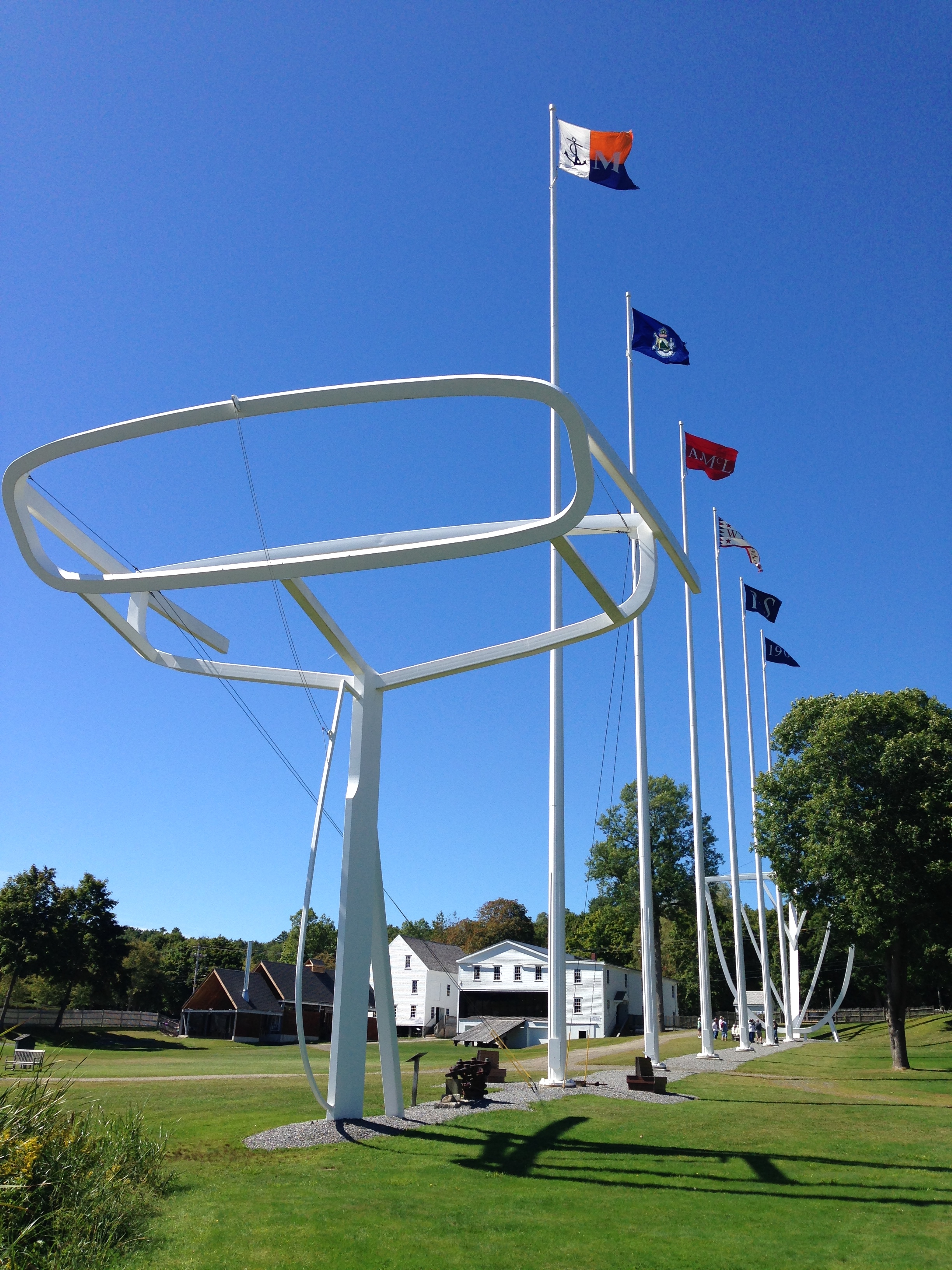
Sculpture on the Maine Maritime Museum campus is reminiscent the schooner, Wyoming.

Sculpture on the Maine Maritime Museum campus is reminiscent the schooner, Wyoming.

The museum ‘s 20 acre campus offers plenty of grass, picnic tables, and kids-oriented features. In addition to its traditional museum offerings, the museum sponsors trolley tours of its neighbor, the Bath Iron Works, the Zumwalt’s builder.

 Our 2-hour visit of the Maine Maritime Museum was hardly enough; but we had to keep moving as our days in Maine were melting away and we had obligations down the road, including a flight back to SFO in a few days.

 Seven miles down US#1 from Bath is Brunswick, the location of Bowdoin College and the Peary-MacMillan Arctic Museum,  which is on Bowdoin’s attractive campus.  The reader may not be aware that the explorer Robert E. Peary was in Bowdoin’s class of 1877 – Peary

Bowdoin's campus showed really well - this building houses the Arctic Museum.

Bowdoin’s campus showed really well – this building houses the Arctic Museum.

and his assistant, Matthew Henson, are said to have been the first to the North Pole.

 The Museum’s collections largely relate to the cultures, geography, and natural history of Labrador, Baffin Island, Ellesmere Island, and Greenland.  Permanent exhibitions focus on the natural and cultural diversity of the Arctic.  The temporary exhibit during our visit was a large selection of Inuit Art, largely from Cape Dorset on Baffin Island, lent by private collectors.

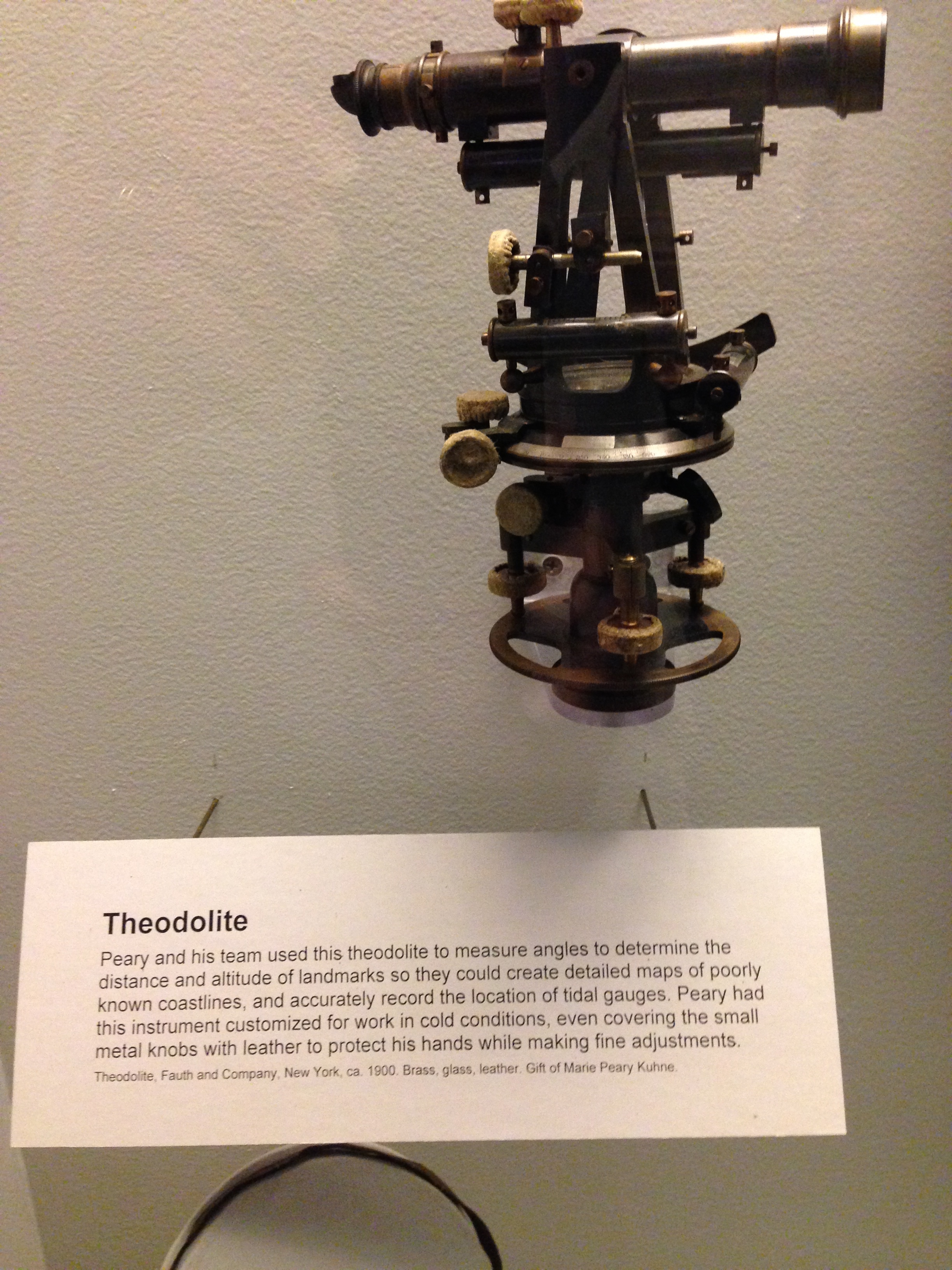
Some of Peary's equipment is in the permanent exhibit.

Some of Peary’s equipment is in the permanent exhibit.

 As a group, the three museums mentioned above provide good insights on some of Maine’s history and the state’s important role in the nation’s maritime endeavors.

 Finally, I must mention the Coastal Maine Botanical Gardens, which are in fact on a tidelands shoreline.  Opened in 2007, the 270 acre garden is designed beautifully and it’s

Even late in the season the Coastal Maine Botanical Garden was in bloom.

Even late in the season the Coastal Maine Botanical Garden was in bloom.

well on the way to becoming a “must do” in coastal Maine.  (Beware – the drive from Camden took longer than Google Maps said, so, unfortunately, our time in the garden was short.)  Even so, we were glad to view, walk, and inhale the gardens, and look forward to a future, longer visit.


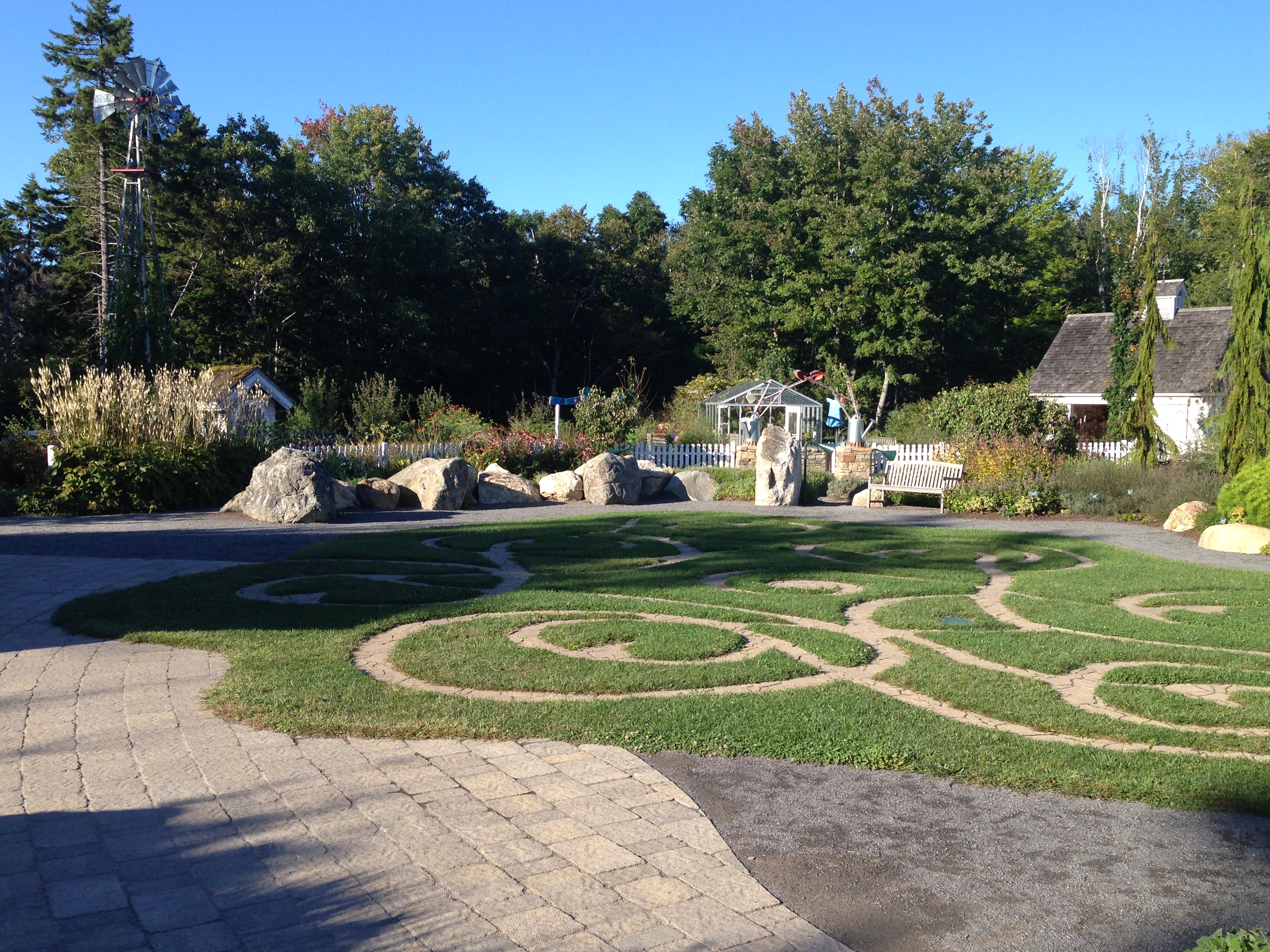
The Garden has many  well designed elements - one could have a good day by just watching the changes as the sun goes across the sky.

The Garden has many well designed elements – one could have a good day by just watching the changes as the sun goes across the sky.


Posted in Museums, Non-profits | Leave a comment

Premier Whaling Museum’s programs coming to San Francisco

This brief post is to help inform the reader of several ocean/whale-related events in San Francisco next week.  On Tuesday, 9/30, The New Bedford Whaling Museum, the largest in the world and probably the best, is sponsoring a reception in connection with an exhibit it is presenting at the Maritime Museum in the San Francisco Maritime National Historical Park, 900 Beach Street, San Francisco, California.

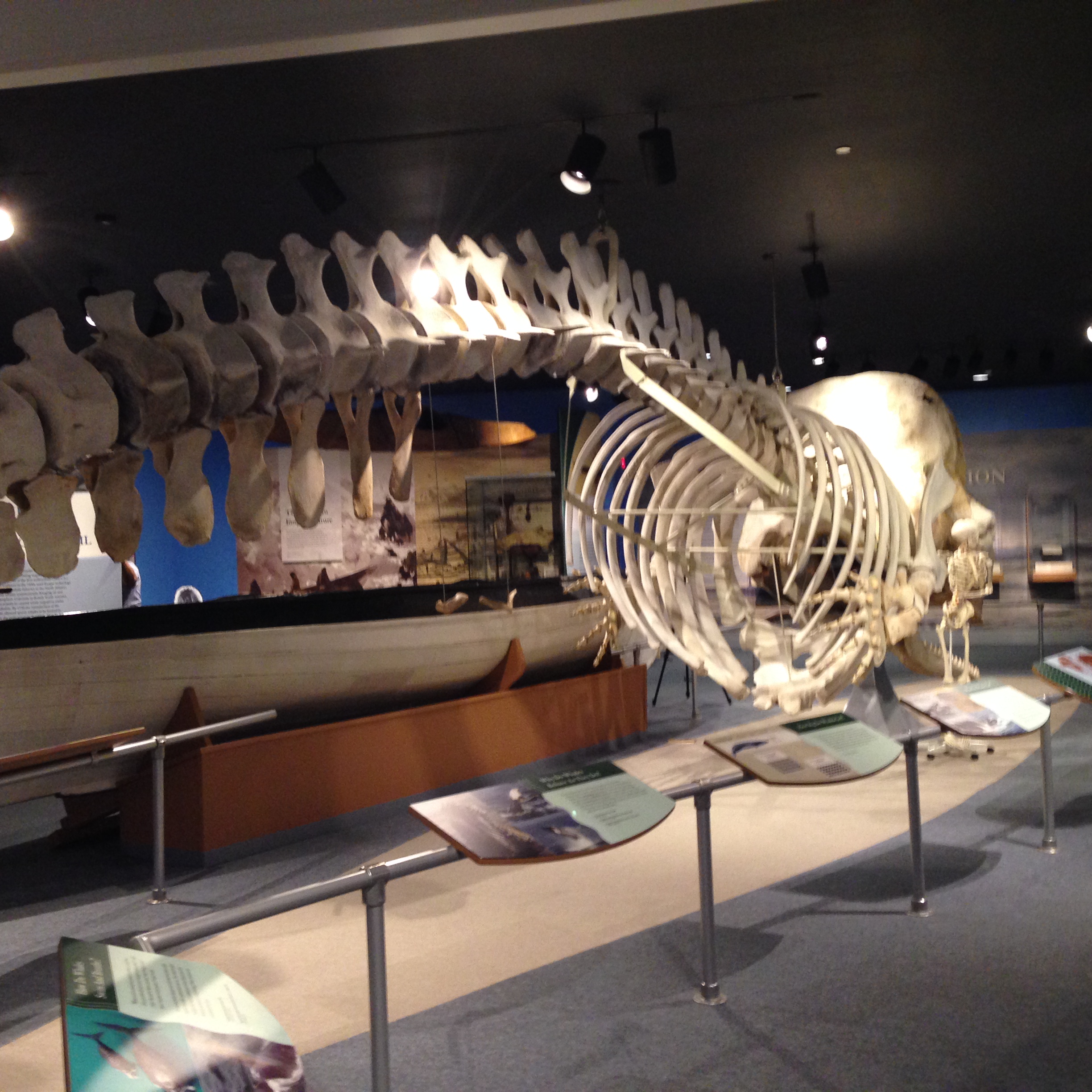
Whales are large as are their skeletons.

Whales are large as are their skeletons.

Admission to the museum, exhibit, and reception are free. The reception (5:30-7:30) will be followed by an optional dinner at McCormick & Kuleto’s at $75/person.

The next day, October 1, will feature several talks in connection with the exhibit.  They too are free, please see the Whaling Museum Invitation for all the details.

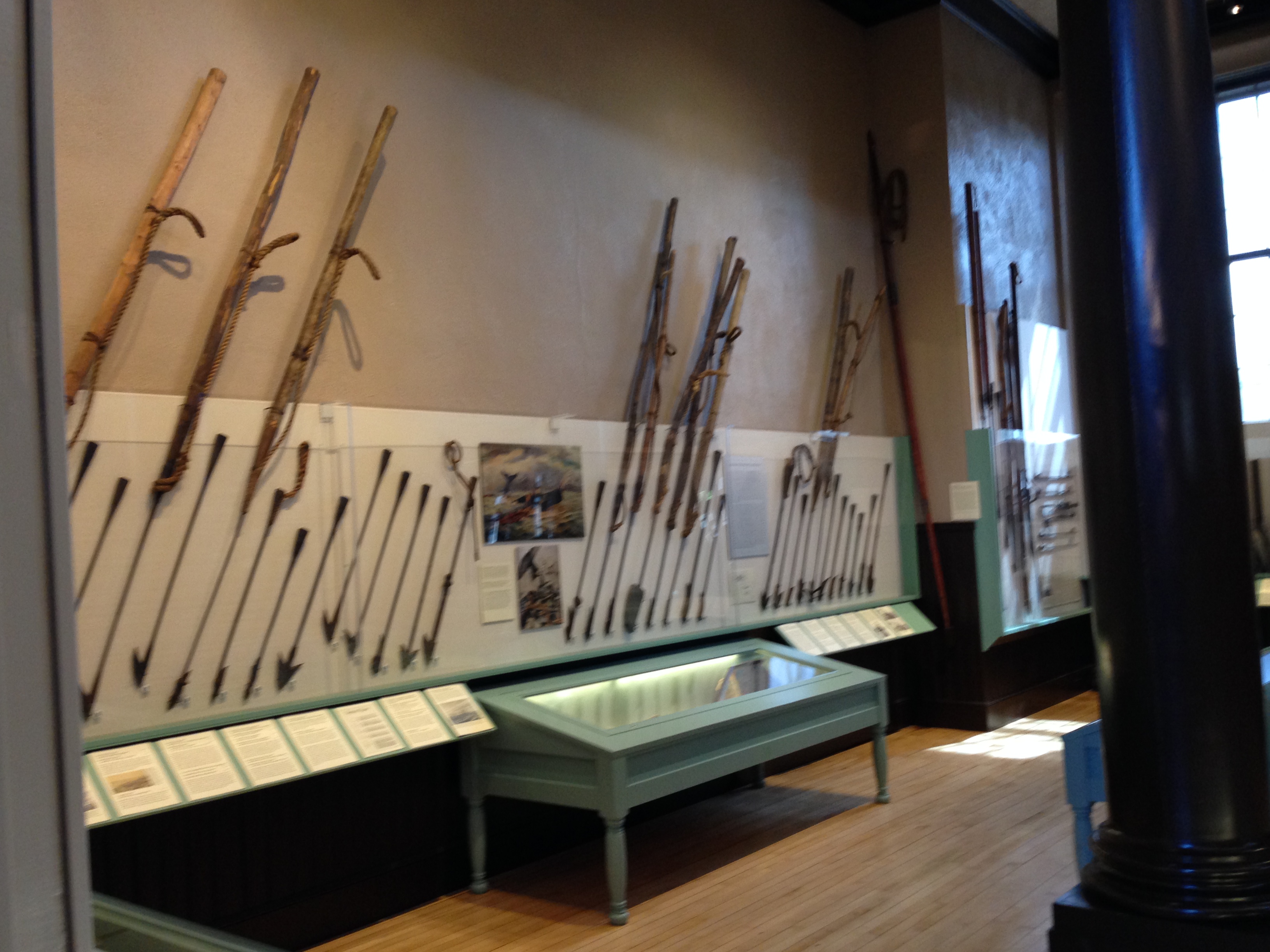
I have not seen the exhibit yet, but I did visit the Whaling Museum in Massachusetts earlier this month. It is exceptional, with broad and deep collections of whaling related property, including maps, books, scrimshaw, fine art, glass art, ship parts and models, skeletons, photos, ephemera, moving images, and so forth.

Some of the harpoons on display.

Some of the harpoons on display.


Along with the objects, the museum’s exhibits emphasize the cultural influences of whales and the whaling industry, which for a while, had its world center in New Bedford.


The museum's explanatory messages are generally excellent.  Some are also provocative.

The museum’s explanatory messages are generally excellent. Some are also provocative.

Posted in Museums, Non-profits, San Francisco | Leave a comment

Two Bootstrapped Maine businesses

As promised, in this and one or two future posts, I’ll describe briefly several Maine businesses that are examples of the genre of bootstrapped businesses, and that have prospered without the benefits and costs of venture capital.

#1: Designer bags from used & recycled sails!
While exploring one of of the piers on Portland’s working waterfront, I came across Sea Bags.  It was before the doors were open, so I returned a day later during normal business hours.  At that time I observed 6-9  seamstresses hard at work, the store manager, and a couple other staff.  Also at this headquarters location was a large inventory of bags for purchase, or to serve as models of what Sea Bags could do on a custom basis.

As background, in 1999, Sea Bags was the first in the market to design and manufacture handmade tote bags and accessories from recycled sails. Founded and headquartered in Portland, Sea Bags claims it is built around three cornerstones: keeping production local, green in product and practice, and being involved in the community.

While the company has grown to nearly 50 employees, it is still located on the Portland’s working waterfront where all its bags are manufactured.  The product line now ranges from totes and wine bags to home decor and accessories. Custom Designed Sea Bags are also a cornerstone of the brand, allowing customers to design a Sea Bag that reflects their own style and personality.

Sea Bags is unique in that all products are handmade from recycled sails, ensuring that each bag is truly one-of-a-kind. The sail’s previous life on the water is apparent through the natural markings featured on the material that can range from salt and rust to wear and color variations.

Sea Bags recently opened their third retail location and first outside of Maine in Cape May, NJ.

Note: Sea Bags has a policy of no photos while in their facility.  Please see their website at http://Seabags.com for photos, order forms, loads of press mentions, etc.


#2: Entertaining and instructional boat tour with a real lobsterman!
Here we discuss a wonderful tour, described more fully on Captain John’s website, http://lululobsterboat.com/

Captain John himself!  He does all the LuLu tours.

Captain John himself! He does all the LuLu tours.

From http://lululobsterboat.com/: “Captain John Nicolai is one of Maine’s most knowledgeable and entertaining lobster experts. The Captain has made it his mission to help sustain Maine’s lobster fishery by promoting its rich history and traditions, and teaching the importance of preserving the state’s lobster population. His belief is that the process starts by educating people. Captain John’s enthusiasm and sense of humor, as well as his great repertoire of tales from the Maine coast, make his presentations as fun as they are informative. The Captain has been featured many times in the national and international media, including the CBS Morning Show, the Food Network, the Travel Channel, PBS, the Outdoor Channel, the Outdoor Living Network, ITV of Ireland, TF1 of France and Japanese television, to name just a few.”

LuLu seats 40 or so customers and we understand Captain John does over 400 trips/year, working, obviously, only during the warmer months. Very knowledgeable about Maine and the lobster ecosystem and business, he also gives talks and lectures and especially likes to do so in Hawaii!

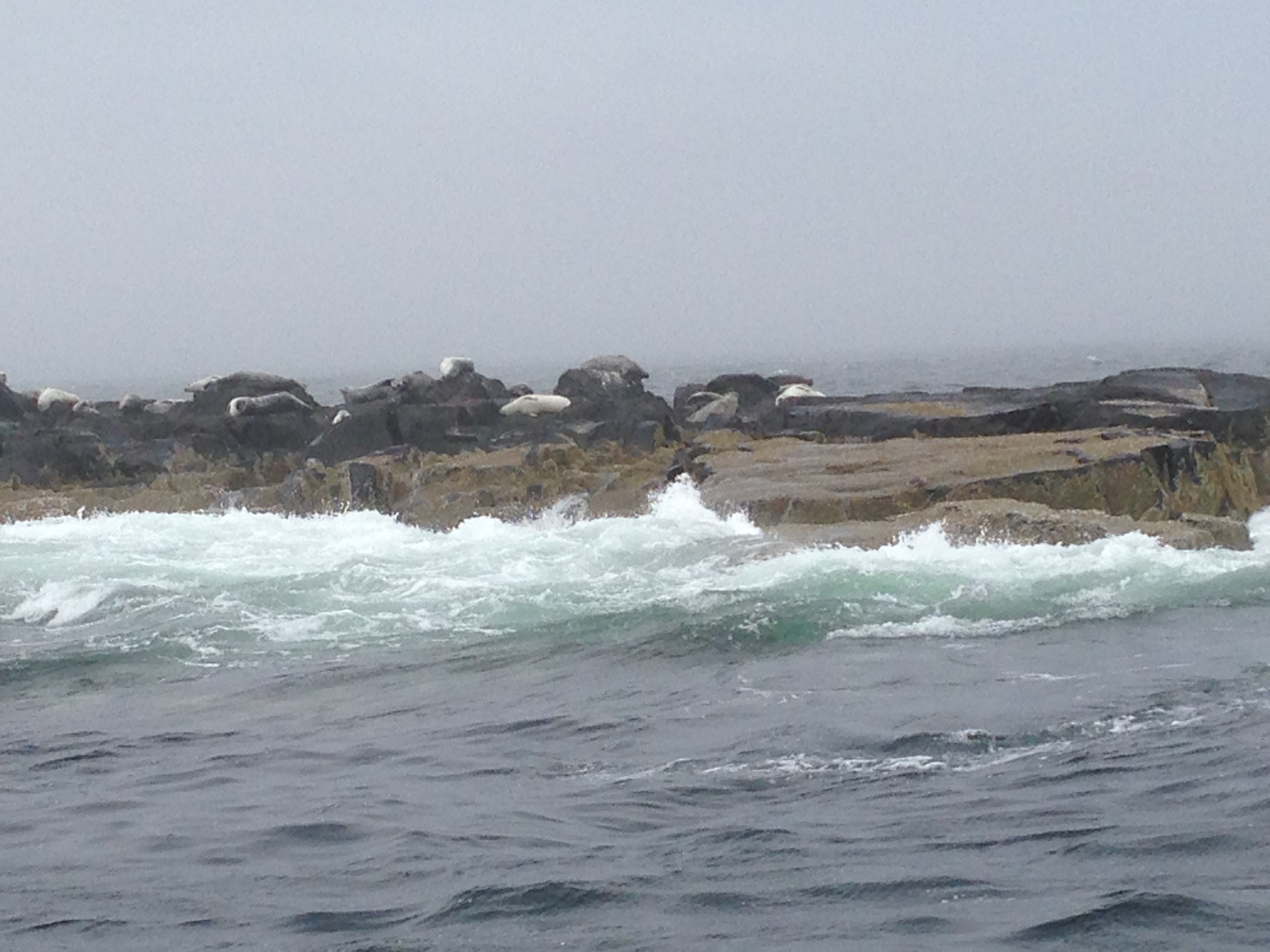
My wife and I were really fortunate to hear by word of mouth of this tour, which is out of Bar Harbor.  Not only does it offer an education on lobsters, but that is preceded by a run out to Eggrock Lighthouse and great views of nearby wildlife (seals, seabirds).  

Eggrock Lighthouse is a few miles out of Bar Harbor

Eggrock Lighthouse is a few miles out of Bar Harbor

Seals lounging as we passed by

Seals lounging as we passed by

In sum, the tour was exceptional, the best of its class, and is highly recommended.


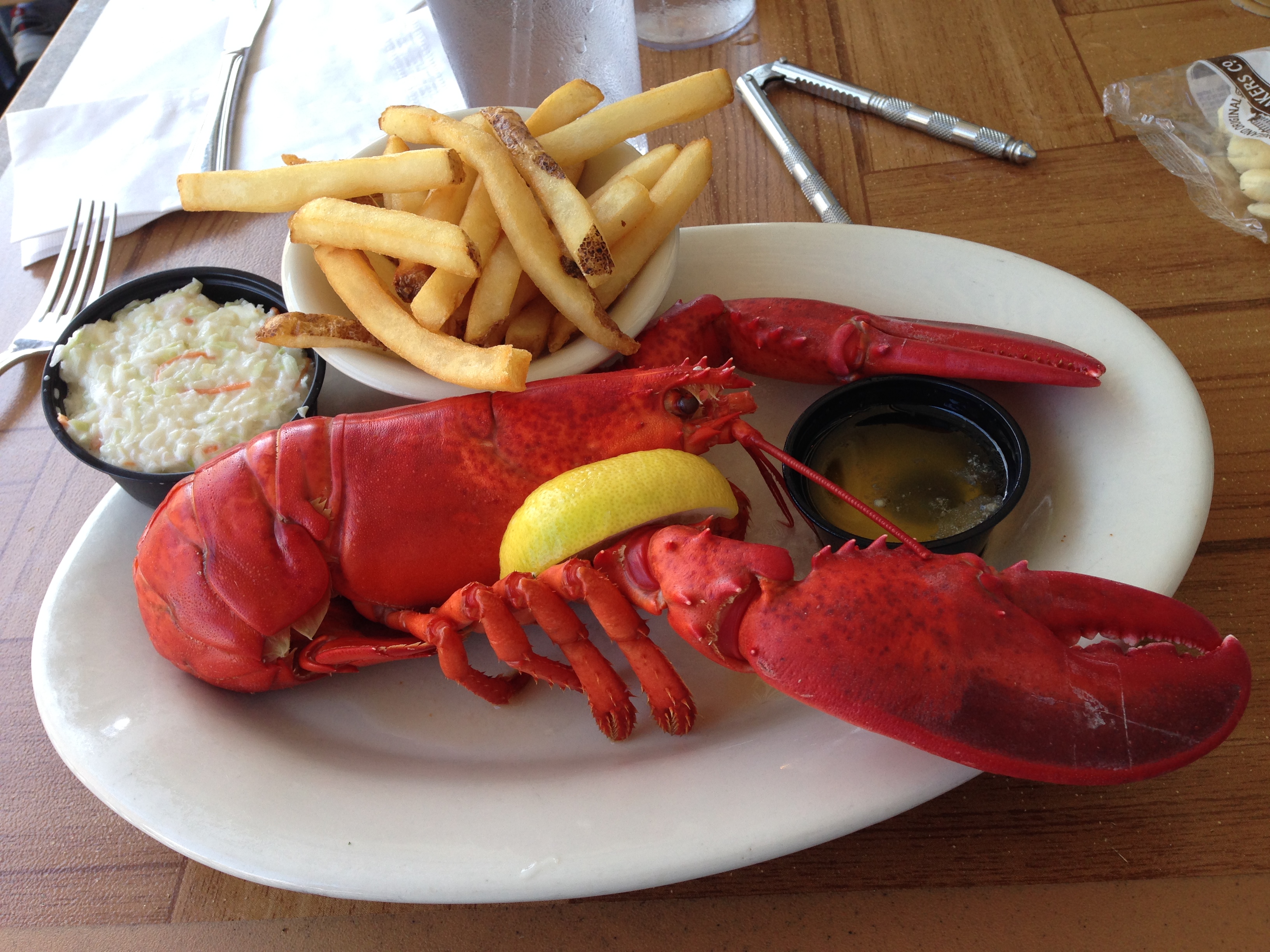
One view of the crustacean closely identified with Maine, taken soon after we disembarked.

One view of the crustacean closely identified with Maine, taken soon after we disembarked.

P.S. Please don’t miss the details on Captain John, linked to here.  Yes, he’s a real entrepreneur.  In Maine.


Note: this and any future post are without commercial consideration – the comments are mine alone except when noted otherwise.

Posted in Entrepreneurs & Entrepreneurism, People of note | Leave a comment

Entrepreneurship in Maine

In preparing for a recent vacation in New England, my wife and I scheduled meetings with long-time friends in New Hampshire, Maine, and Massachusetts.   Other than these waypoints with loosely scheduled dinner or overnight dates, we were free to explore.

New England was new territory for us, so of course we travelled with a growing inventory of paper maps – maps that helped us see the overall picture, easily plot out interesting routes, and underwrite our confidence and inclinations to improvise and explore.

In my imagination, the vacation has generated several categories of blog material: noteworthy museums, swimming “holes” I experienced, and bootstrapping entrepreneurs in Maine. Now back in San Francisco for less than a week and coming off a good vacation,  I feel somewhat deprived of business related intellectual nourishment. So this post and a couple more will discuss bootstrapping in Maine, leaving subjects with a less mercenary nature for later.

San Francisco is in the midst of an unprecedented period of wealth creation, venture capital investing, construction, and rising housing prices. (As the reader may be aware, this cycle has been in place for several years and shows no sign of slowing.)  A continuing influx of young, educated, ambitious people is both the cause and effect of hundreds of small startup enterprises with ambitions to be the next Google, Twitter, Facebook, etc., or to be acquired by one of the aforementioned.  (All are headquartered in the Bay Area and have numerous staff members working and/or living in San Francisco.).  Firms including those mentioned have been recipients of billions of dollars of venture capital, while such an achievement has become, in an of itself, a badge of honor for many entrepreneurs.

I’ll save for another day expressing  my thoughts & feelings on the mentality and wisdom of entrepreneurs seeking and raising venture capital with the logic of “I’ll take VC money IF I CAN GET IT.” For the time being I’ll just say I have serious doubts that it’s always the right thing to do.

Compared with the Bay Area and San Francisco, Maine is certainly a different animal. It has a relatively modest population which is pretty spread around. It has a history of harvesting from the land and sea, and continues to rely on the same.  Consistent with its New England location, it has a conservative outlook and traditions are highly valued.  It has limited educational offerings for hi-tech careers; the professional community is general purpose and doesn’t appear to have much depth in hi-tech verticals such as IP, IP litigation, VC investing, IPOs, etc.

Notwithstanding Maine’s modest resources for hi-tech business creation when compared with the Bay Area, Maine has many entrepreneurs. They are almost all boostrappers by necessity, often leveraging the unique attributes of their location, to build solid, profitable, growing businesses.

On holiday, we came in contact with many one-of-a kind, bootstrapped businesses, especially in Maine.  They may not go public anytime soon, but they provide a good living to many, and offer a location and lifestyle that has significant appeal.  I’ll briefly describe several in a future post(s).

One resource for bootstrappers:  Maine’s Institute for Family-Owned Businesses

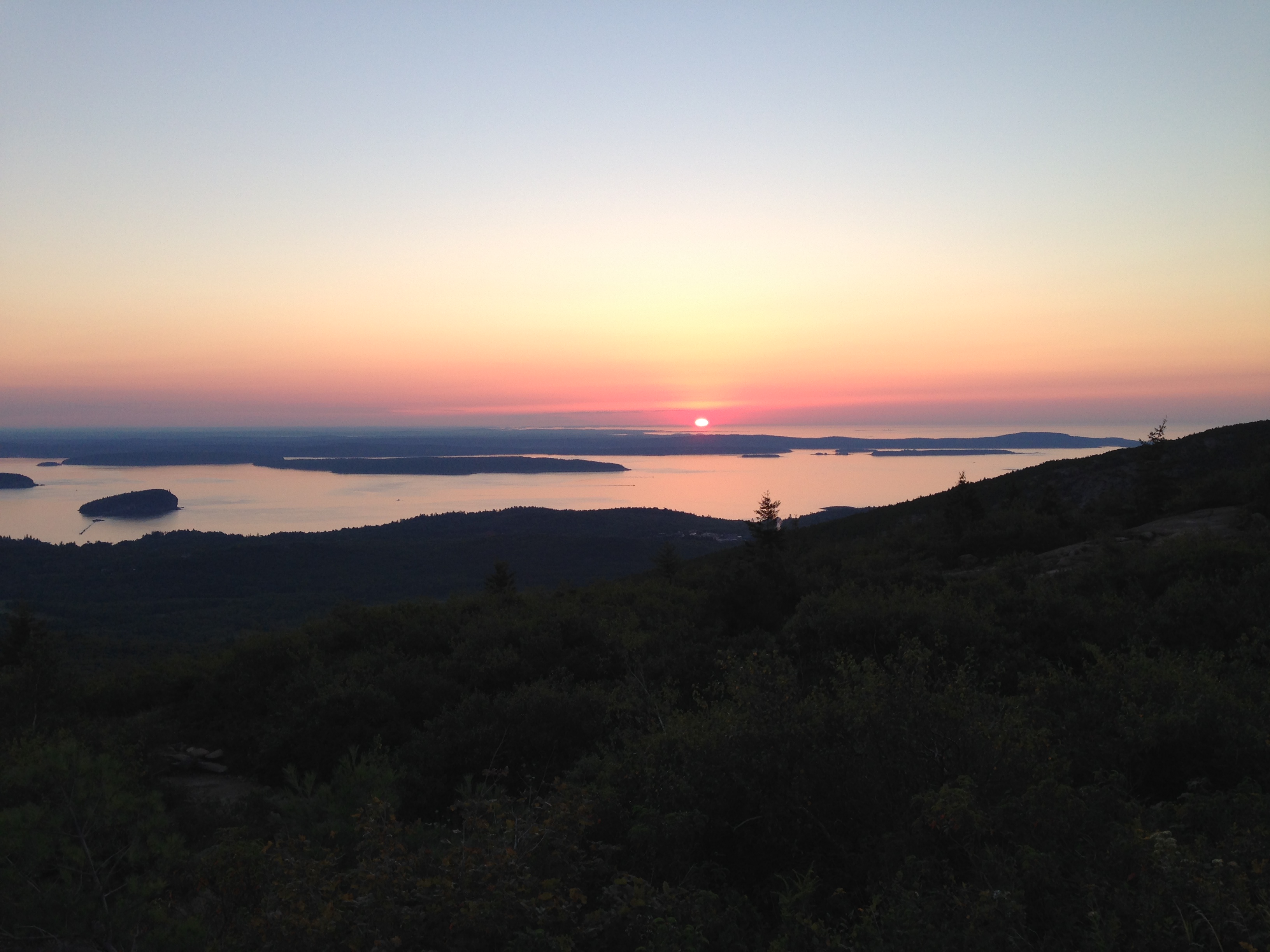
Early September sunrise from Cadillac Mountain, Acadia National Park, Maine

Early September sunrise from Cadillac Mountain, Acadia National Park, Maine

Posted in Entrepreneurs & Entrepreneurism | Leave a comment

Sierra Nevada photos

Here are a few more photos of my recent, short visit to the mountains:

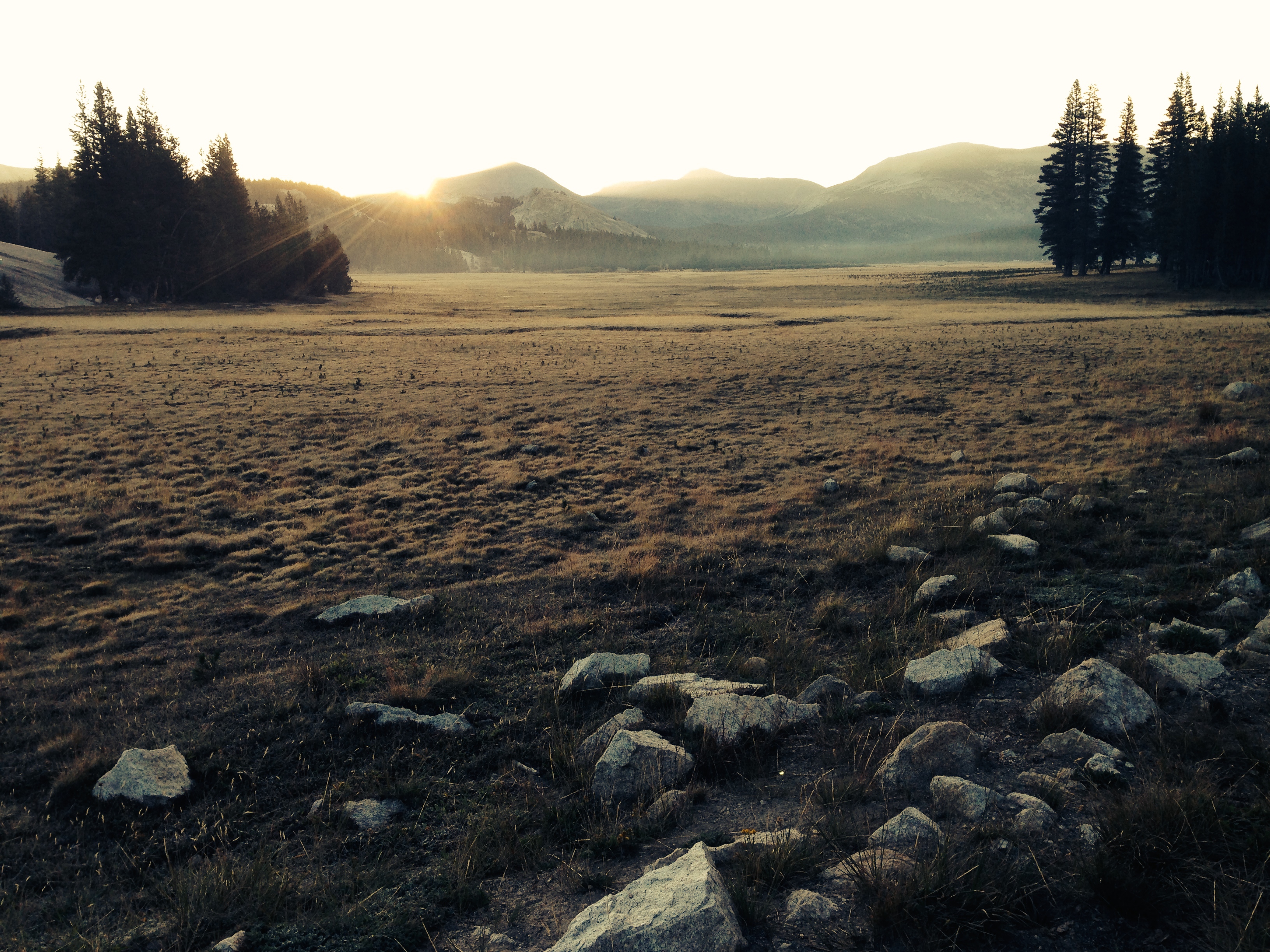
Sunrise in Tuolumne Meadows, 8/18/14

Sunrise in Tuolumne Meadows, 8/18/14

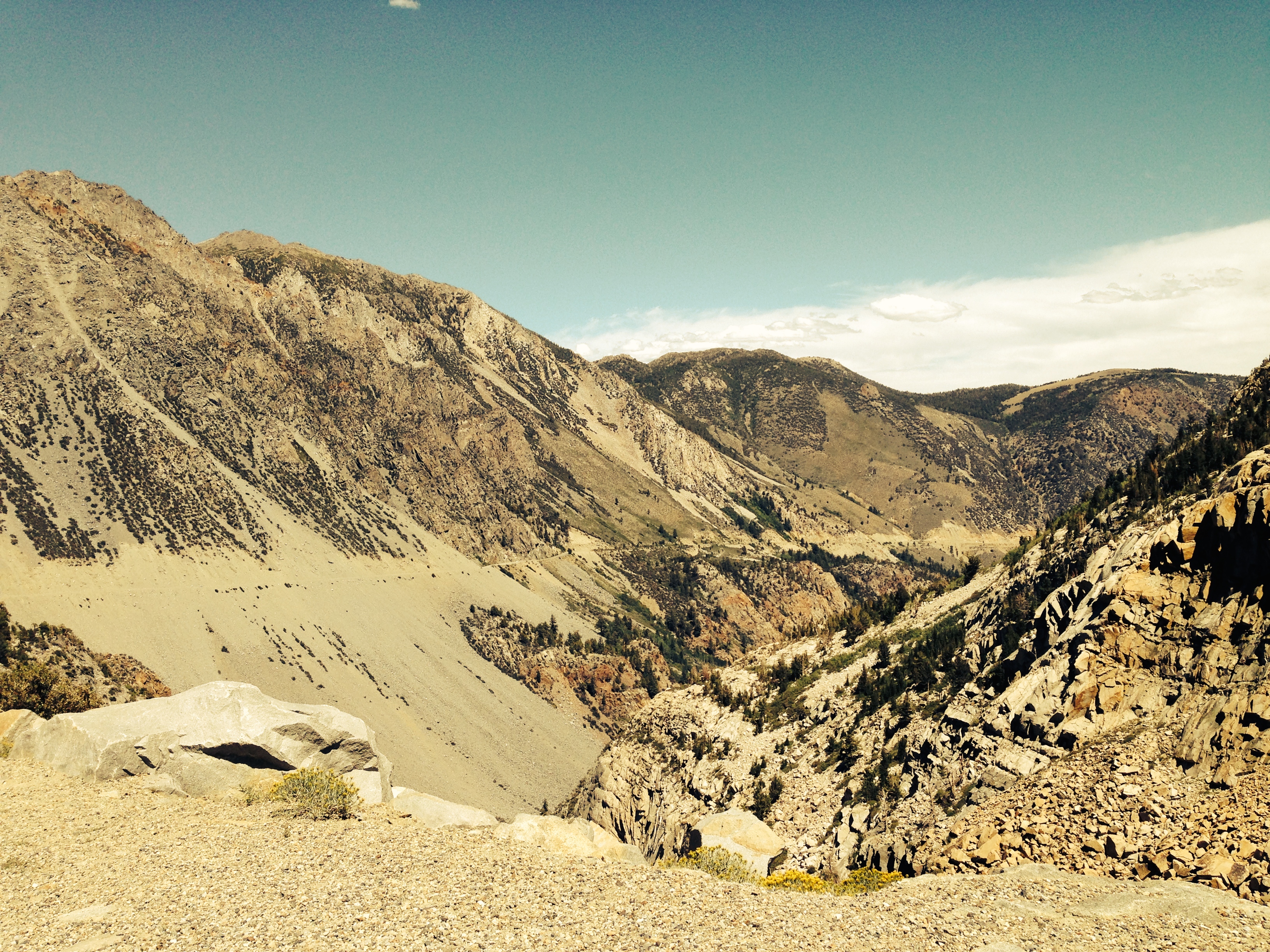
Moving right along, after exiting Yosemite, we begin the descent to to US 395 & Mono Lake.  This downhill of about 10 miles is one of my all-time favorite drives.

Just east of Yosemite's eastern entrance station on CA route 120, we see the road winding down toward Mono Lake.

Just east of Yosemite’s eastern entrance station on CA route 120, we see the road winding down toward Mono Lake.

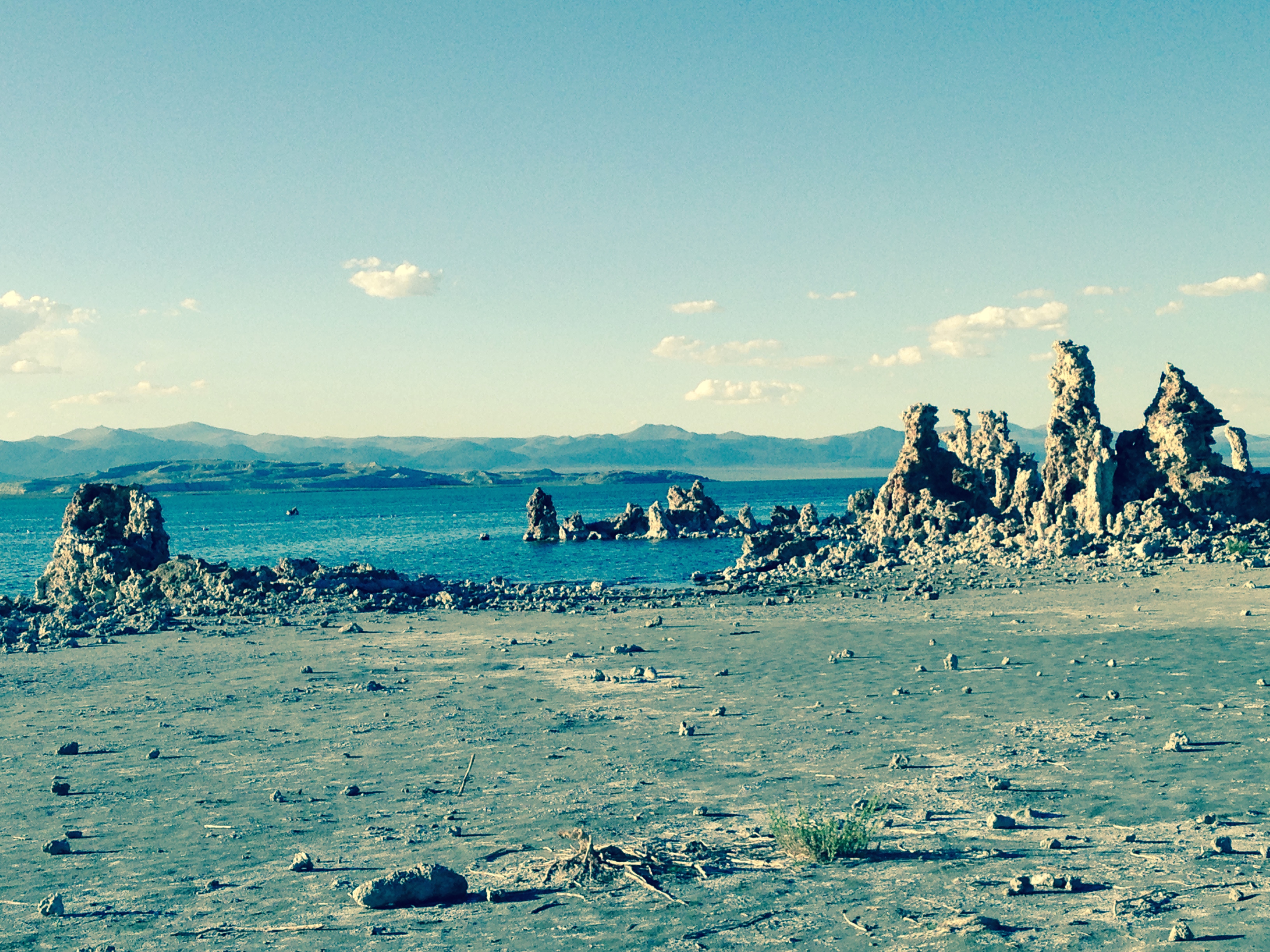
After an instructive visit at the US Forest Service Visitors Center at Mono Lake (where I continue to be amazed and intrigued by the birdlife that passes through, and the lake’s flies, brine shrimp, salinity and history) I drove to the south shore for a tufa viewing.  It was a beautiful time of the day, an hour or so before sunset.

Exposed tufa towers at Mono Lake, CA

Exposed tufa towers at Mono Lake, CA

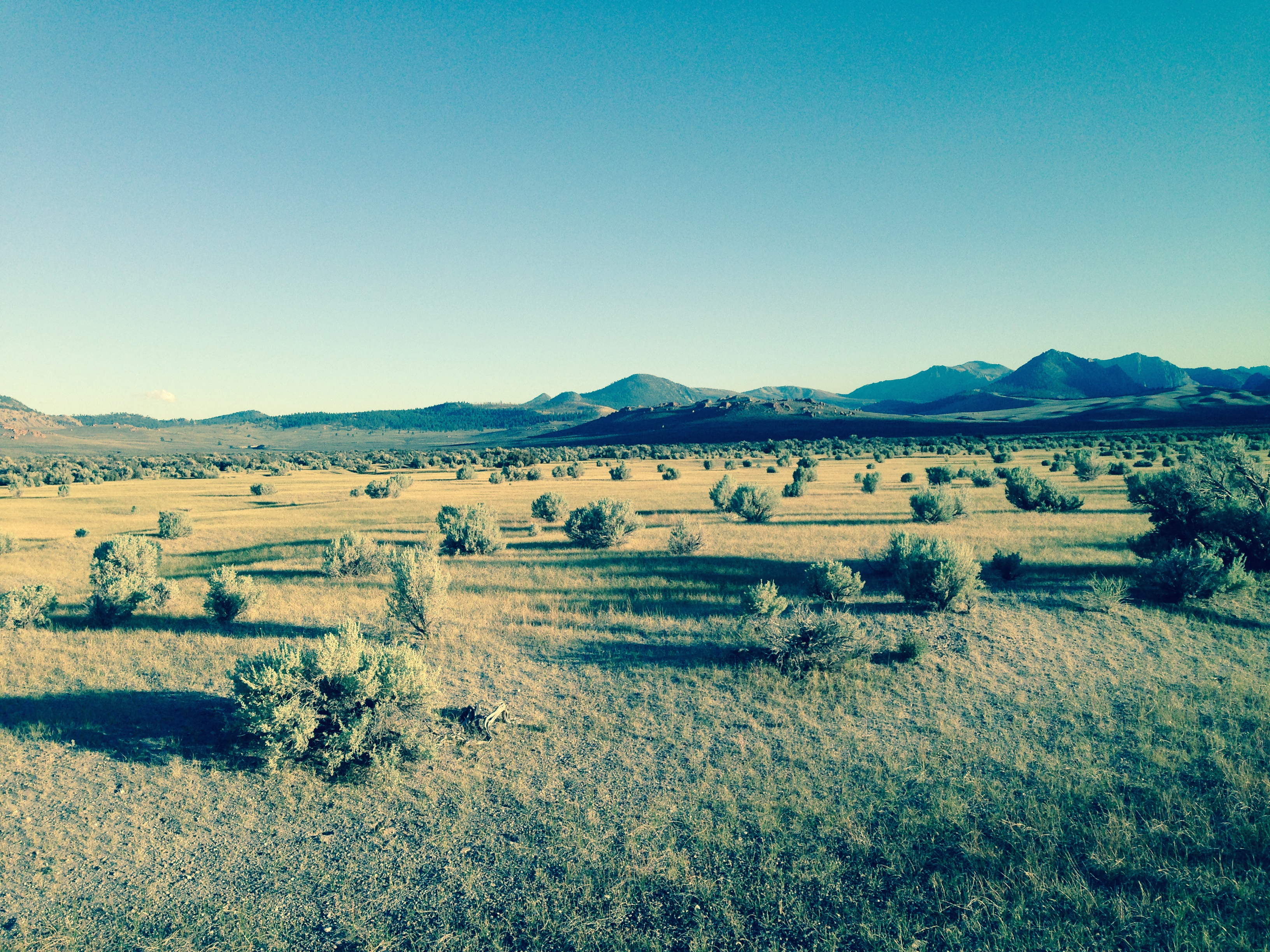
A little later, as I was heading to the town of June Lake and a campground, I was impressed by the vista & shadows:

View south near sunset 8/18/14 from Mono Lake's south shore access road

View south near sunset 8/18/14 from Mono Lake’s south shore access road

The next day I drove into Mammoth to explore that resort town, favorited by Southern Californians.  Not bad.

I continued on down 395 a few miles, drove up to Convict Lake for the first time, and was duly impressed.  An attractive lake only 2 miles of paved road from 395, the lake offers hiking, fishing, camping, and boating/kayaking.  It also has a very attractive commercial operation with cabins, restaurant, bar, store, etc.

A few more miles down 395 and I reached Toms Place, a wide spot in the road, and started the 9 mile drive up Rock Creek to the parking lot at the end, known as Mosquito Flat.  It being late in the season, I didn’t detect even one mosquito.

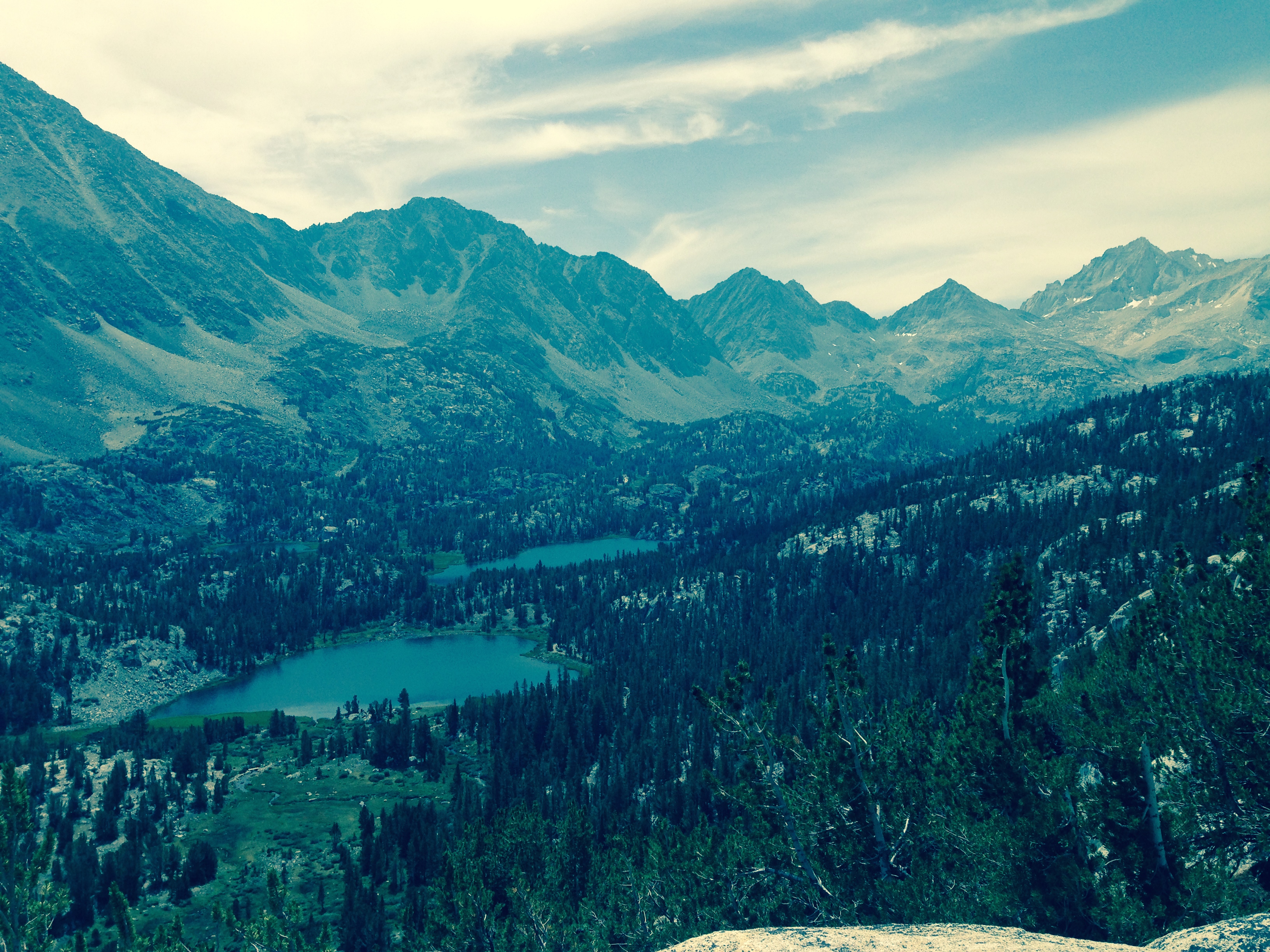
The path begins and after a few hundred yards, it’s up, up, up, although it was just a steady up, not extreme.  The views were good right away.

View south over the a portion of the Rock Creek drainage aka Little Lakes Valley

View south over the a portion of the Rock Creek drainage aka Little Lakes Valley

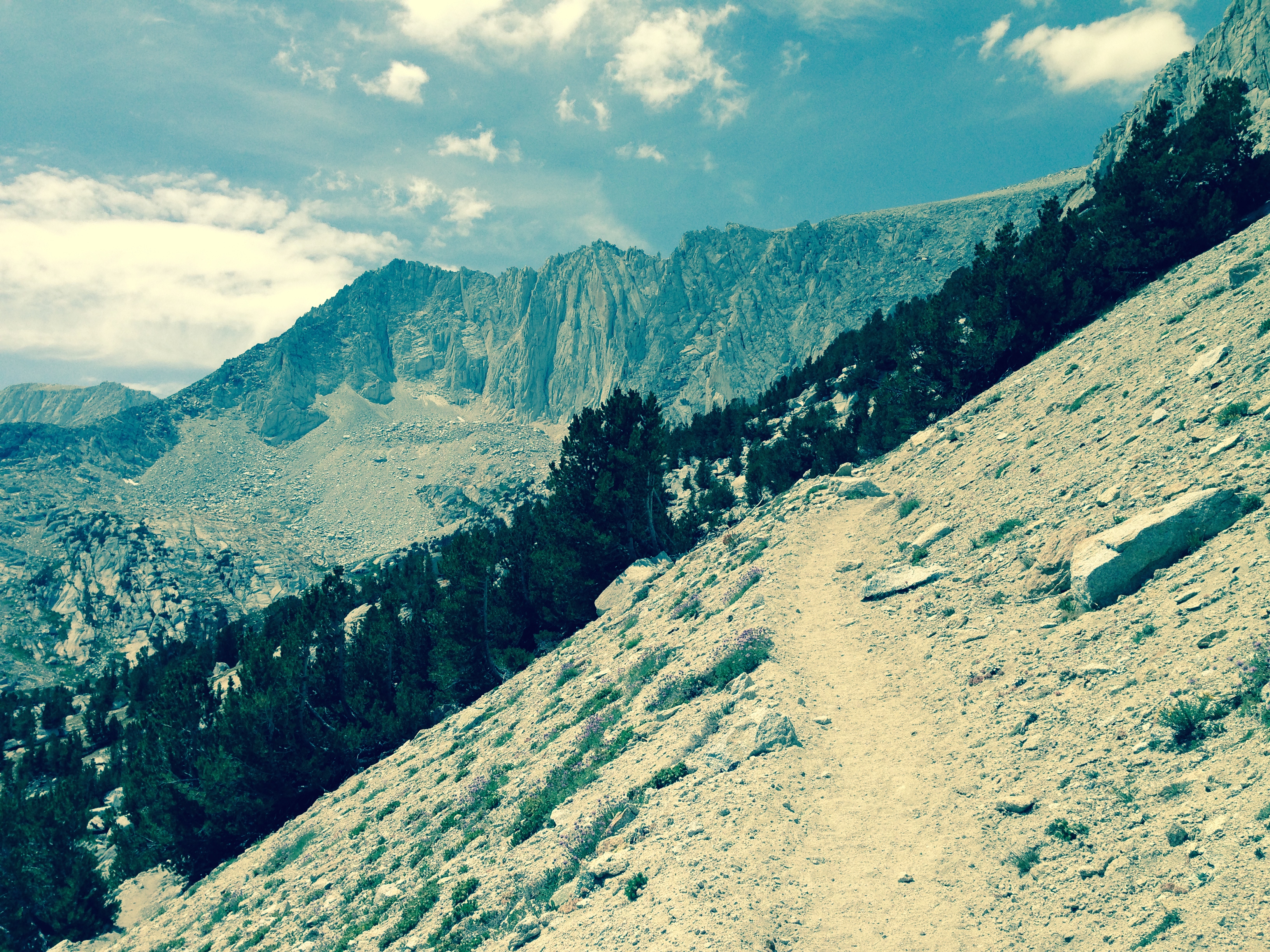
About halfway to Mono Pass the switchbacks began.  Not as challenging as they might have been, considering the somewhat southern Sierra location.

Typical scene on the switchback portion of the Mono Pass Trail

Typical scene on the switchback portion of the Mono Pass Trail


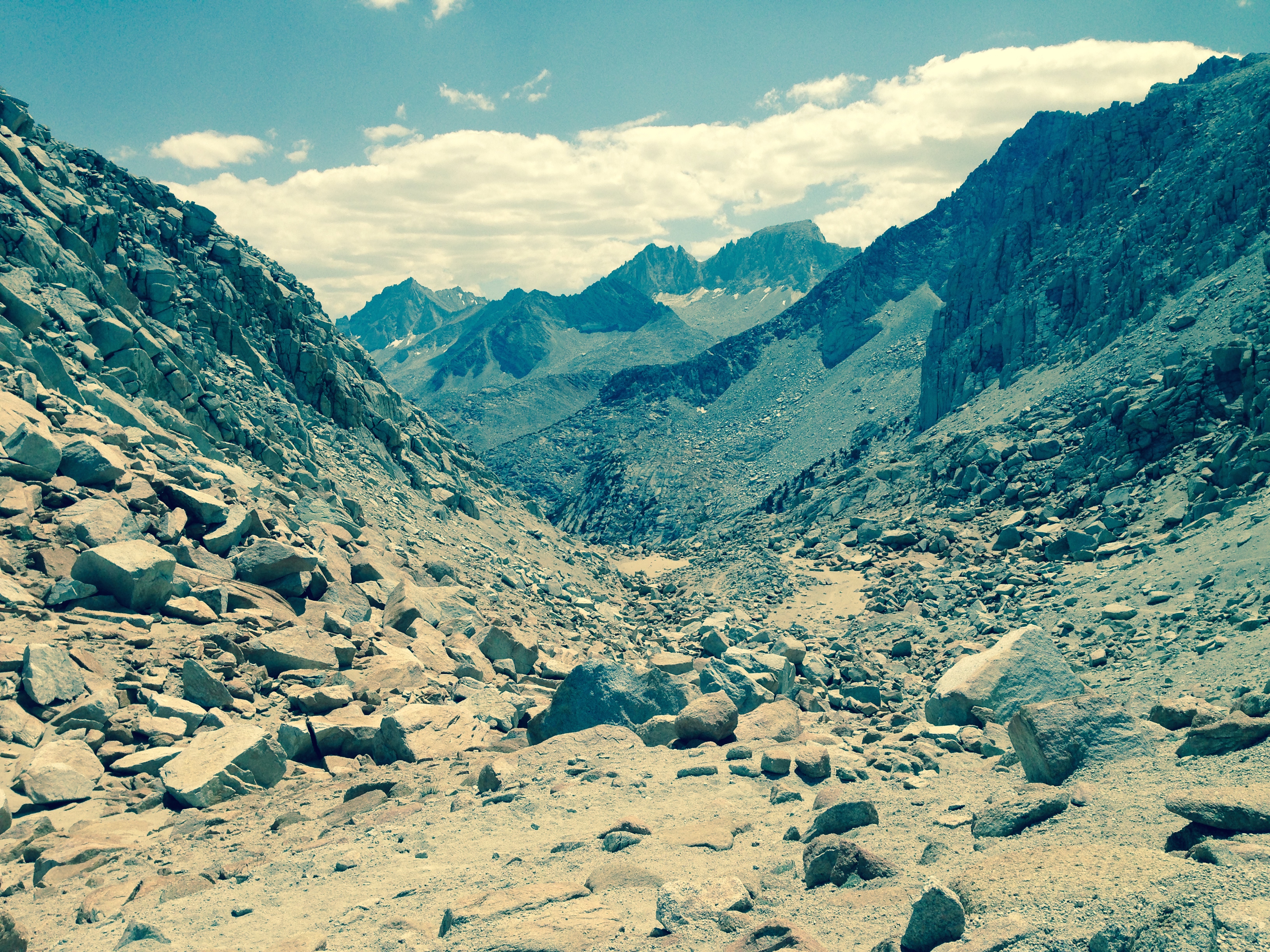
As you may have noted in the previous entry, I made it to Mono Pass, a nice place to be.  While there is lots to do on any mountain pass, I was on a timetable and turned around after a few minutes.

Looking southwest as the hike from Mono Pass down begins

Looking southwest as the hike from Mono Pass down begins

After returning to the trailhead, changing into my flip-flops, and beginning the drive out, I detoured briefly for a short swim in Rock Creek Lake.  Then it was time to hit the bricks.

In Bishop I couldn’t resist stopping at the wonderful Mountain Light Gallery which features the photography of the noted landscape photographer, Galen Rowell.

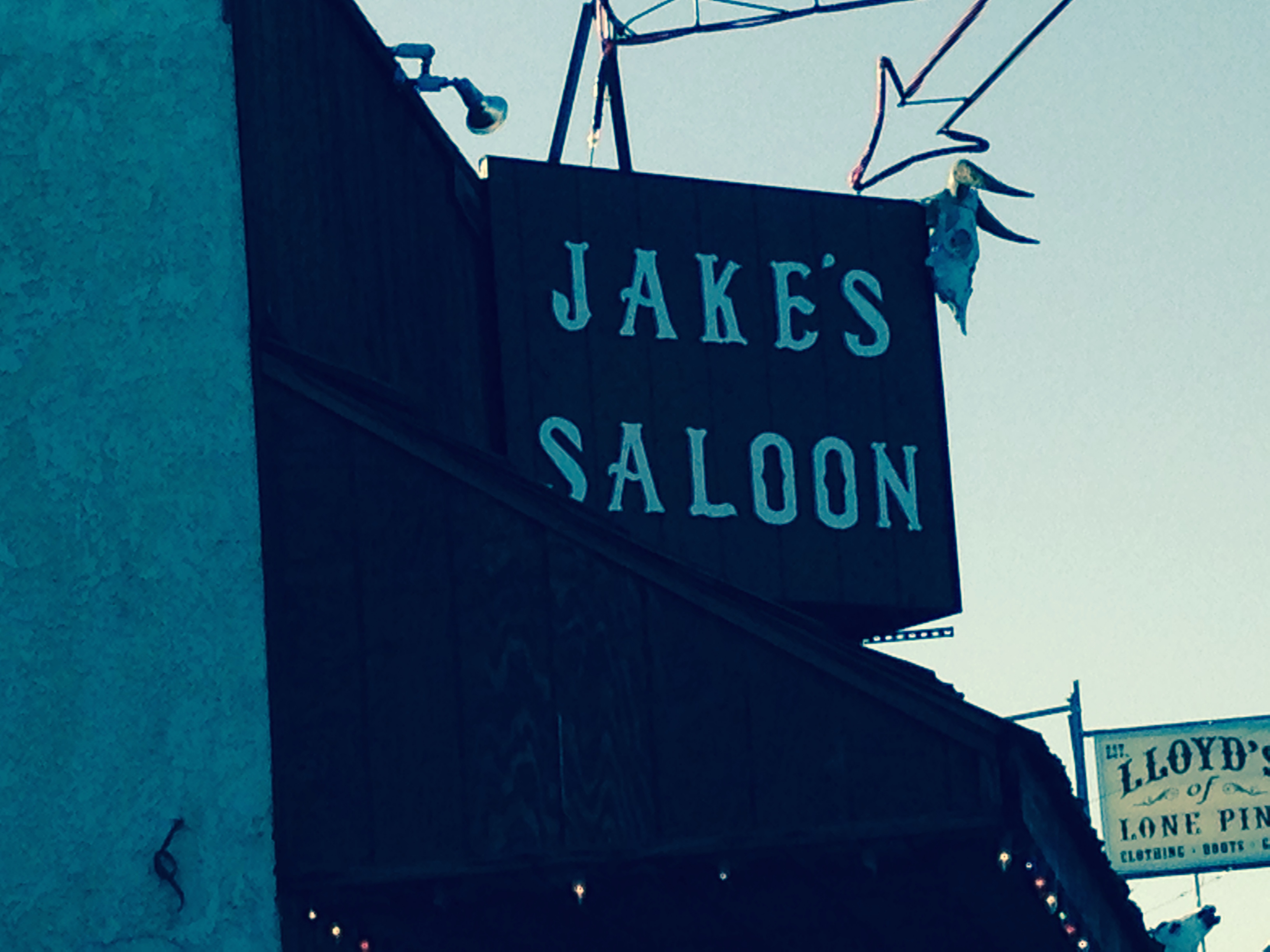
I continued south to Lone Pine, the jumping off town for Mount Whitney, the highest summit in the contiguous U.S.   There I saw a familiar name:

Important signage on US 395, Lone Pine, CA

Important signage on US 395, Lone Pine, CA

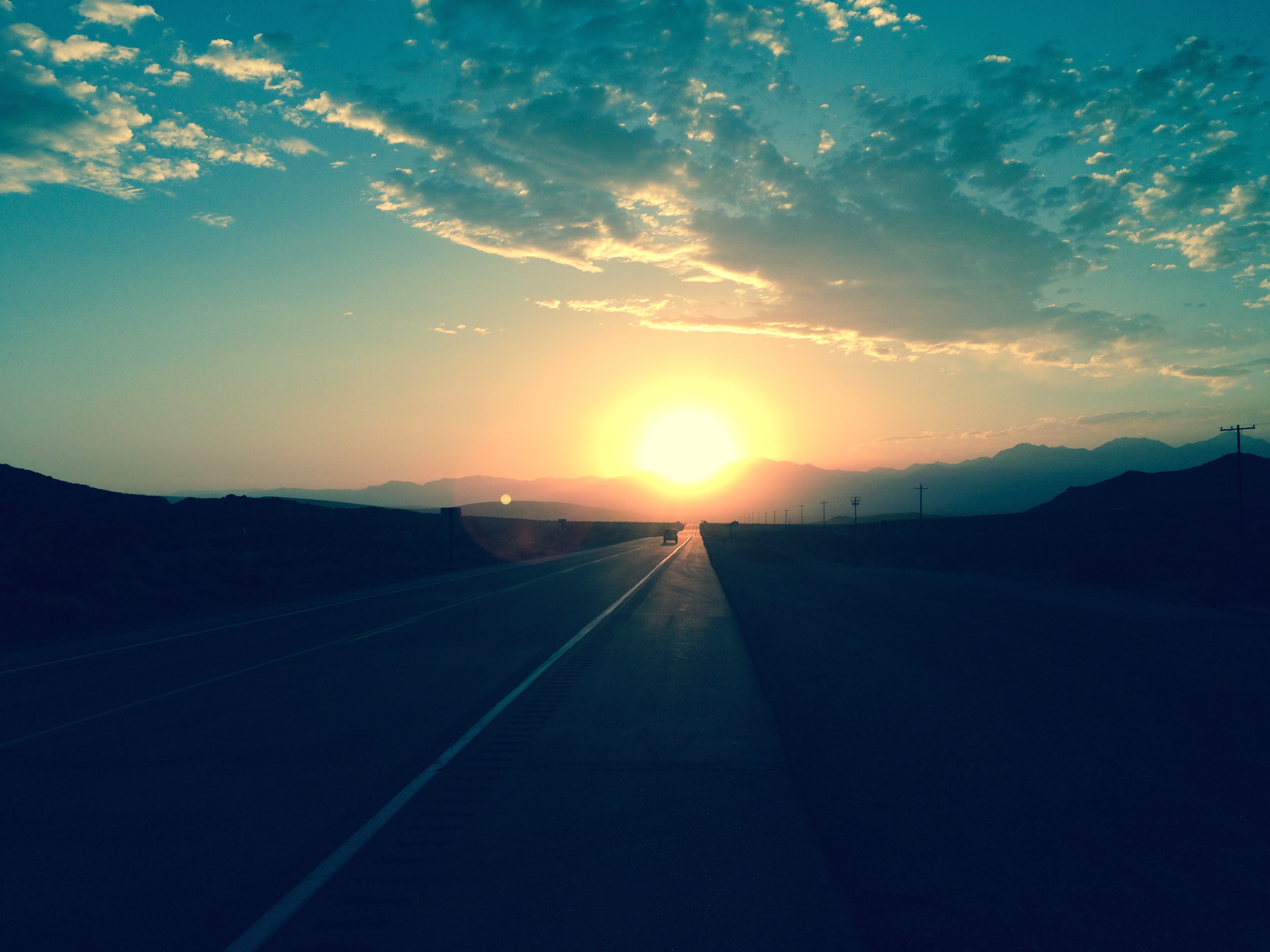
Continuing on as the sun set, I stopped & turned around to catch the sunset of that beautiful, memorable day:

Sunset 8/19/14 from US 395 with southern portion of Sierra Nevada range as backdrop

Sunset 8/19/14 from US 395 with southern portion of Sierra Nevada range as backdrop


Posted in Outdoors, Sierra Nevada, Terrestrial | Tagged | Leave a comment